What Features Should an OTT Platform Have? Full Guide
Discover the essential OTT platform features, including video delivery, content management, monetization, security, analytics, and multi device streaming.


Table of contents
Introduction
Streaming platforms can be packed full of content, but if users encounter issues with slow loading speeds, poor navigation, few payment options and difficulties finding content they’ll soon become frustrated.
When deciding whether to go ahead with a streaming solution businesses need to look past the appealing apps.
Knowing what features your OTT platform should offer will help you provide a good infrastructure, manage content well and give users a reliable source of entertainment on any device.
Quick Answer
An OTT platform must have features like content management, adaptive streaming, multi device support, subscriptions, content protection, analytics and easy navigation. Features like AI recommendation, live streaming, advertisements and multiple languages will be based on business needs. The ideal platform will provide a good viewing experience, efficient operations, monetisation and scalability.
What Are the Essential Features of an OTT Platform?
An OTT platform will typically be made up of a number of systems which work together to manage and provide video content over the internet.
Key feature areas will be:
- Content Management: Managing the video content, metadata and scheduling.
- Playback: Ensuring smooth video playback.
- User Experience: To assist users find and view content.
- Monetisation: Supports subscriptions, advertising and transactions.
- Security and Analytics: Secures content and provides insights.
You should consider each component when choosing technologies for your business.
For example, OTT infrastructure should support the complete viewing workflow, from account registration and content discovery to playback and subscription management.
Which Video Streaming Features Are Most Important?
Reliable Playback
If your videos aren’t playing or buffering then no matter how interesting your content may be it won’t matter.
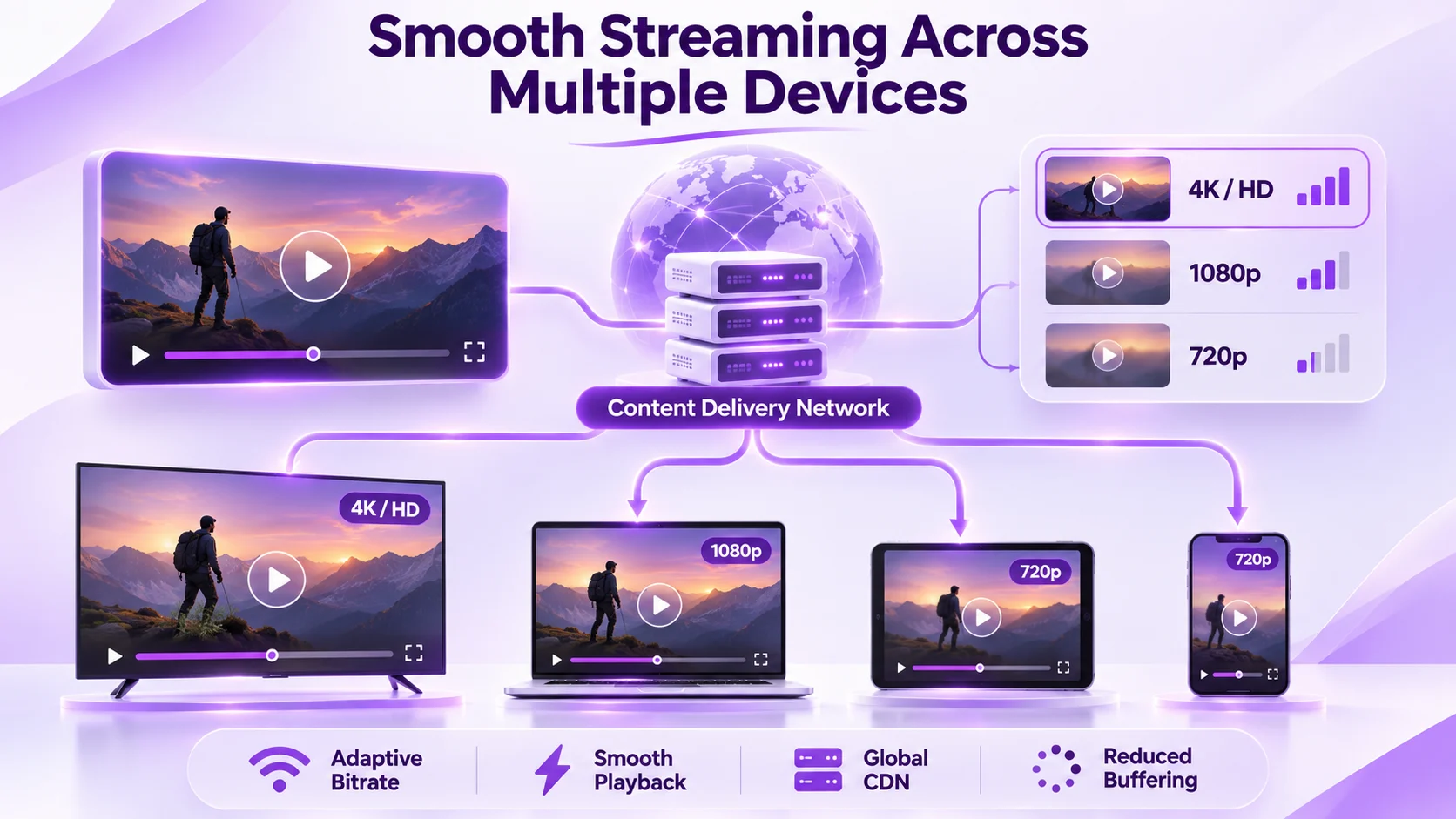
1. Adaptive Bitrate Streaming
Adaptive Bitrate Streaming (ABR) enables you to change the quality of your video depending on what bandwidth is available.
If someone has changed from their Wi Fi to mobile data whilst watching your video, they can watch with a reduced quality instead of experiencing buffering.
2. Content Delivery Network
A Content Delivery Network (CDN) delivers your content via multiple servers around the world.
Which will reduce any additional latency.
3. Multi device support
Your viewers will want to watch your content on their preferred device.
You will need to make sure your content can be played on:
- Browsers
- Android/iOS
- Smart TVs
- Streaming devices
Where possible you should make sure the playback, navigation and history is consistent across devices.
How Should an OTT Platform Manage Content?
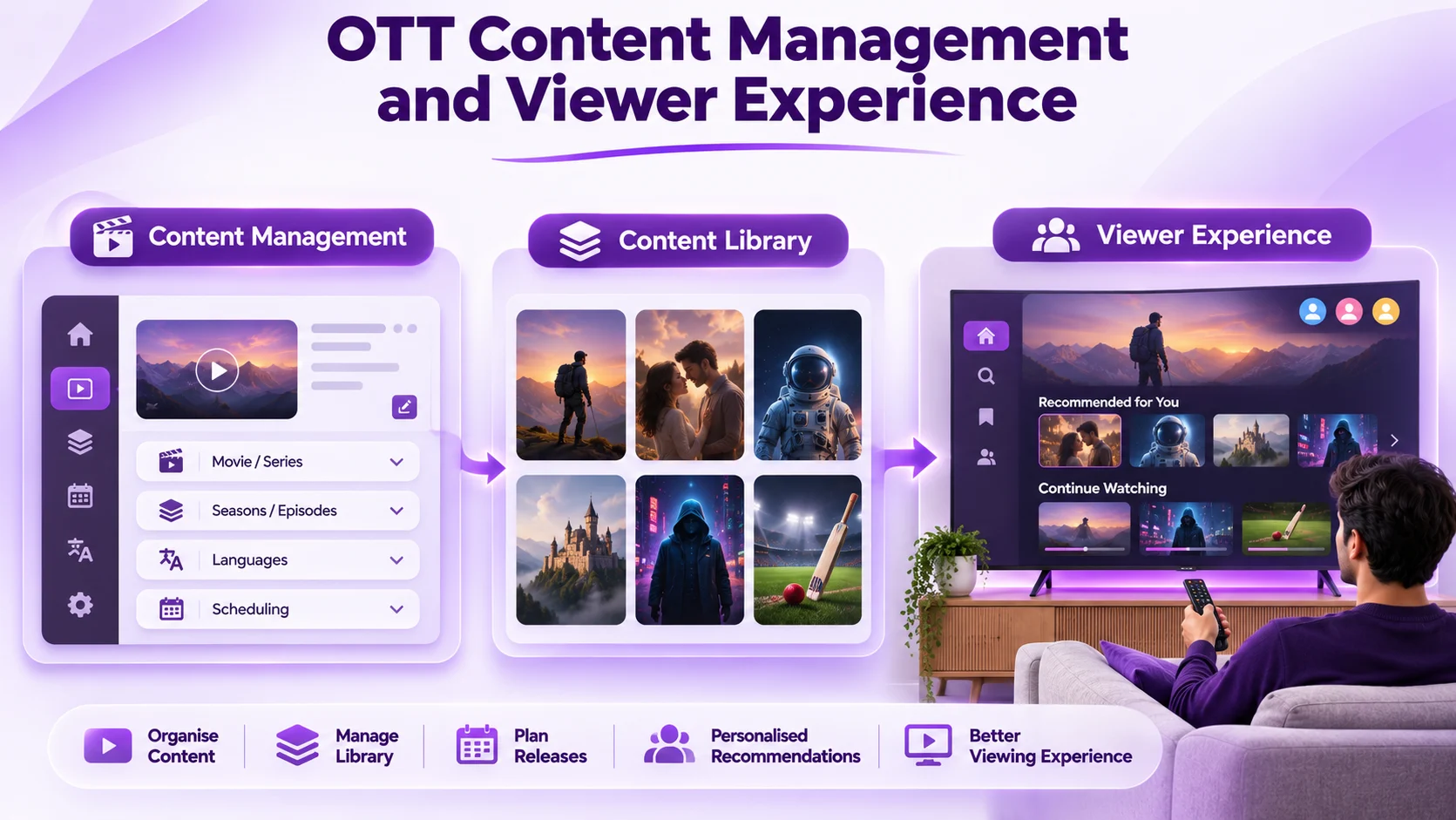
A Content Management System (CMS) can be used to manage your video libraries.
Without an efficient CMS, it will become a challenge to manage multiple shows, seasons, languages and content providers.
Key Features
- Upload video files
- Manage titles, descriptions and thumbnails
- Create categories and collections
- Schedule content
- Restrict content to certain regions
- Set up administrator permissions
For example, a film streaming service may wish to make a film available in a specific country only due to licensing agreements.
Your CMS should allow administrators to set up these rules and link them to your access control system.
It is important that your content is accurate to ensure that episodes are in the correct order, titles haven’t expired and subtitles are present.
What Features Improve the Viewer Experience?
An effective platform allows the user to easily find and enjoy entertaining content.
It shouldn’t be difficult for the user to find a specific movie/series with multiple confusing menus.
Some key features to offer to your users:
1. Personalised Recommendations
Recommendations give suggestions to the user based on their viewing habits, interaction or categories.
2. Search Filters
Effective search filters allow the user to search for content using filters such as title, genre, language or other metadata.
3. Watchlist & Continue Watching
This allows the user to add titles to their watch list and continue watching what they have started.
4. Multiple User Profiles
Multiple profiles can be set up so that users can have their own viewing history and preferences.
When reviewing streaming features, businesses should consider how these capabilities work together across supported devices.
A feature is valuable when it solves a genuine viewer problem, not simply because it appears on a product specification sheet.
Which Monetization Features Should an OTT Platform Support?
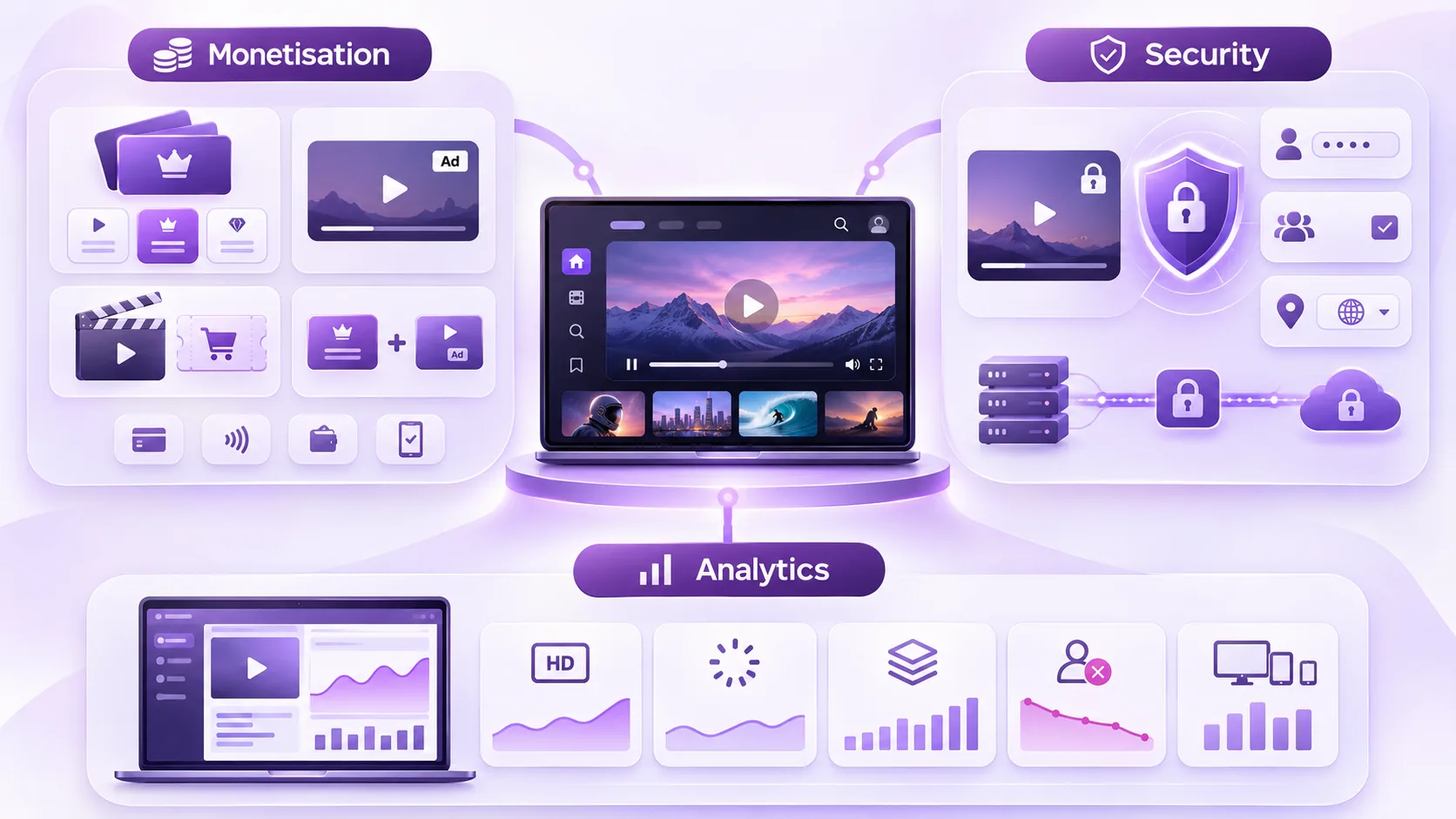
A streaming platform must connect content access with its chosen business model.
Different services require different payment and advertising capabilities.
| Monetization model | Required feature | Suitable content |
|---|---|---|
| SVOD | Recurring subscription management | Premium series and movies |
| AVOD | Advertisement integration | Free entertainment libraries |
| TVOD | Individual purchases or rentals | Films and special events |
| FAST | Scheduled channels and ad insertion | Linear television programming |
| Hybrid | Multiple payment and access models | Mixed content catalogs |
Operators should also evaluate subscription renewals, failed payments, cancellation controls, and viewer access permissions.
For example, a premium subscriber should not lose access after a successful renewal because the billing and entitlement systems failed to synchronize.
Why Are Security and Analytics Essential?
Content Delivery & Customer Management
Secure features to protect licensed content and analytics to provide insight into how your platform is performing.
Key Security Features
- Digital Rights Management (DRM)
- Encrypted Content
- Secure login
- Geo block
- Administrative permissions
Key Analytics
- Video load time
- Playback failures and buffering issues
- Content usage
- Cancellation of subscriptions
- Device specific data
Analytics should give you operators insights into any issues and help them make better decisions.
For example if you have many playback failures on one TV type it could mean there is an issue with that specific device.
Do Live Streaming and VOD Platforms Need Different Features?
Although there is some shared infrastructure, the requirements can be very different.
A live sports application may have requirements around:
- Low latency streaming
- High concurrent viewership
- Stream recovery
Whereas an on demand entertainment application may have requirements around:
- Episode/Season management
- Recommendations
- Multiple audio and subtitles
- Resume watching
- Search and cataloguing
Businesses offering movies and television series can evaluate VOD management capabilities according to library size, licensing requirements, and distribution needs.
The main consideration: Choose specialized features that support the content being delivered rather than paying for capabilities unrelated to the business.
How Can Businesses Choose the Right OTT Platform Features?
You don’t need everything right away.
A smaller streaming service could start with a solid core of content, reliable methods of generating revenue and applications to your core users.
Further customisation or more device applications can be added as the need arises.
A Practical Feature Selection Process
- Know your audience: Ensure they can consume content in their preferred format, on their preferred device and at their preferred time.
- Identify key requirements: Ensure that content can be played, accessed, secured and paid for.
- Check integrations: Ensure it can integrate with any required systems.
- Test the workflow: Ensure that users can register, find content, pay and play.
- Consider growth: Will they allow for more monetisation methods, devices and content types.
Do not choose based on flashy AI features or high resolution video.
The feature should offer a tangible benefit to operations or improve the viewer experience.
Final Thoughts
OTT platforms have a lot to consider when choosing features.
Core features such as content management, adaptive streaming, monetization, security and multi device support are essential to creating a reliable streaming service.
Features such as AI, live stream and advanced personalization should be considered based on your target audience and content strategy.
Choose an OTT platform that will give you the core features you need in a reliable way and also allow you to scale your business where needed.
For more information about OTT platform technology and streaming industry developments, explore OTT insights.
Planning to launch or modernize an OTT platform?
StreamPlay helps media companies, sports leagues, and broadcasters launch branded OTT aggregator apps with CMS, monetization, discovery, and multi-device support.
Frequently Asked Questions
What are key features of an OTT platform?
Content Management, Adaptive Streaming, Monetization, Security, Analytics and Multi Device.
What is adaptive bitrate?
This allows the quality of your video to automatically adapt depending on your internet connection to help reduce buffering.
Should an OTT platform have a CMS?
Yes, it will allow your operator(s) to manage their video library, metadata, scheduling and availability.
What monetisation options should an OTT platform offer?
Subscription, Advertising, Pay Per View, FAST Channels, Hybrid.
Why would an OTT platform need DRM?
To help secure licensed content.
Should an OTT platform have AI recommendations?
Not necessarily. They can help with content discovery, however this depends on how large your content library is, what your audience likes and your business needs.