OTT Platform Development Cost in 2026: Full Guide
Find out how much it costs to build an OTT platform in 2026, including development, video infrastructure, apps, security, and ongoing costs.

Table of contents
How Much Does It Cost to Build an OTT Platform in 2026?
No single price exists for building an OTT platform in 2026.
A basic video service, with web access and a small content library differs greatly from a device streaming business that includes live video, subscriptions, advertising, analytics and thousands of hours of content.
The final cost depends on what's built, what is integrated, how many devices are supported and how much video traffic the OTT platform must handle.
The better way to answer how cost building an OTT platform in 2026 involves is to break the project into its actual cost drivers.
Quick Answer
The cost to build an OTT platform in 2026 depends on the platform’s scope, technology, content library, supported devices, monetization model, integrations, security requirements, and expected viewing traffic. A basic VOD service with web access can require far less development and infrastructure than a multi-device platform supporting live streaming, subscriptions, advertising, analytics, and large content libraries. Costs also continue after launch through storage, transcoding, CDN delivery, maintenance, content licensing, customer support, and platform operations. Businesses can reduce the initial development workload by starting with a focused release or using existing OTT infrastructure such as StreamPlay, while still accounting for configuration, integrations, and ongoing operational costs.
What Determines OTT Platform Development Cost?
The first difference is between the product and the video system that supports it.
A streaming service requires more than an app. Video must be saved, changed, prepared, sent and shown on devices that work with it.
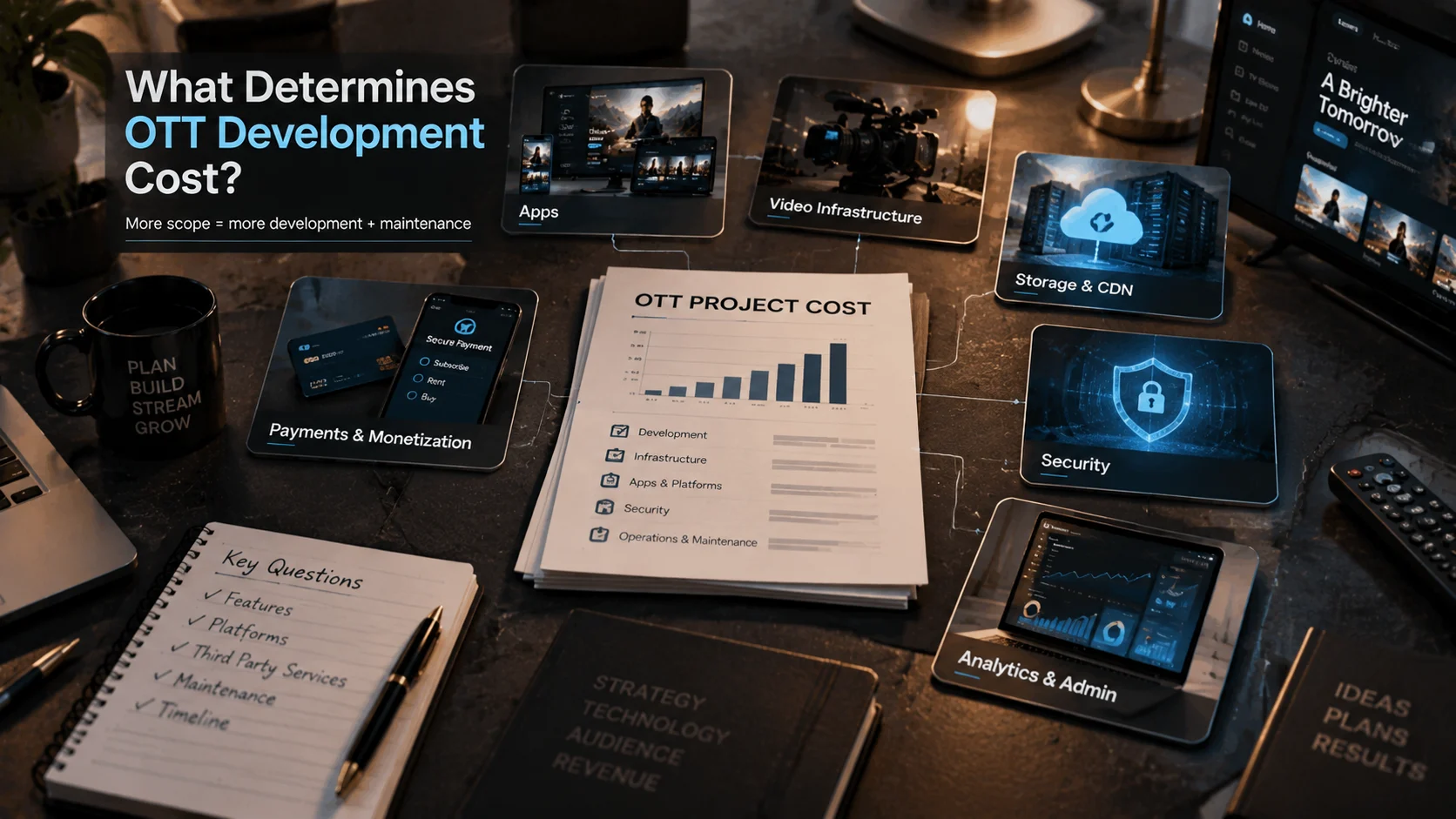
A typical project may include:
- Web and mobile applications
- Smart-TV applications
- User registration and authentication
- Content management
- Video storage
- Video transcoding
- CDN delivery
- Subscription and payment systems
- Advertising
- Search and content discovery
- Analytics
- Security and access controls
- Administrative tools
- Customer-support workflows
The components you build yourself the more development work the project will need. The more maintenance work the project will also need.
How Much Does the Technology Infrastructure Cost?
Infrastructure is usually an expense, not a one‐time development fee.
For a VOD service the basic workflow involves storing video transcoding original video into streaming formats and delivering the resulting files through a CDN.
AWS describes this general architecture using S3 for storage, Media Convert for transcoding and CloudFront for delivery. The important part is that infrastructure costs are usage‐dependent.
Storage costs increase as the content library grows.
Transcoding costs depend on how much video's processed and the output formats created. Delivery costs increase with the amount of video viewers actually consume. That means an OTT platform, with 100 hours of content can have a different infrastructure bill compared to an OTT platform with 100,000 hours of content.
What About Video Streaming Costs?
Video delivery can become one of the costs when a lot of people start watching at the same time. For example AWS has a VOD example where a one-hour 1080p video is turned into different versions. The cost for changing the video format in this example is four dollars and twenty-three cents. The example also shows that sending the video to 1,000 people can create higher costs for the content delivery network than the first step of changing the video format. These are the numbers from AWS. These are the numbers from AWS. These are the numbers, from AWS.
This illustrates an important point:
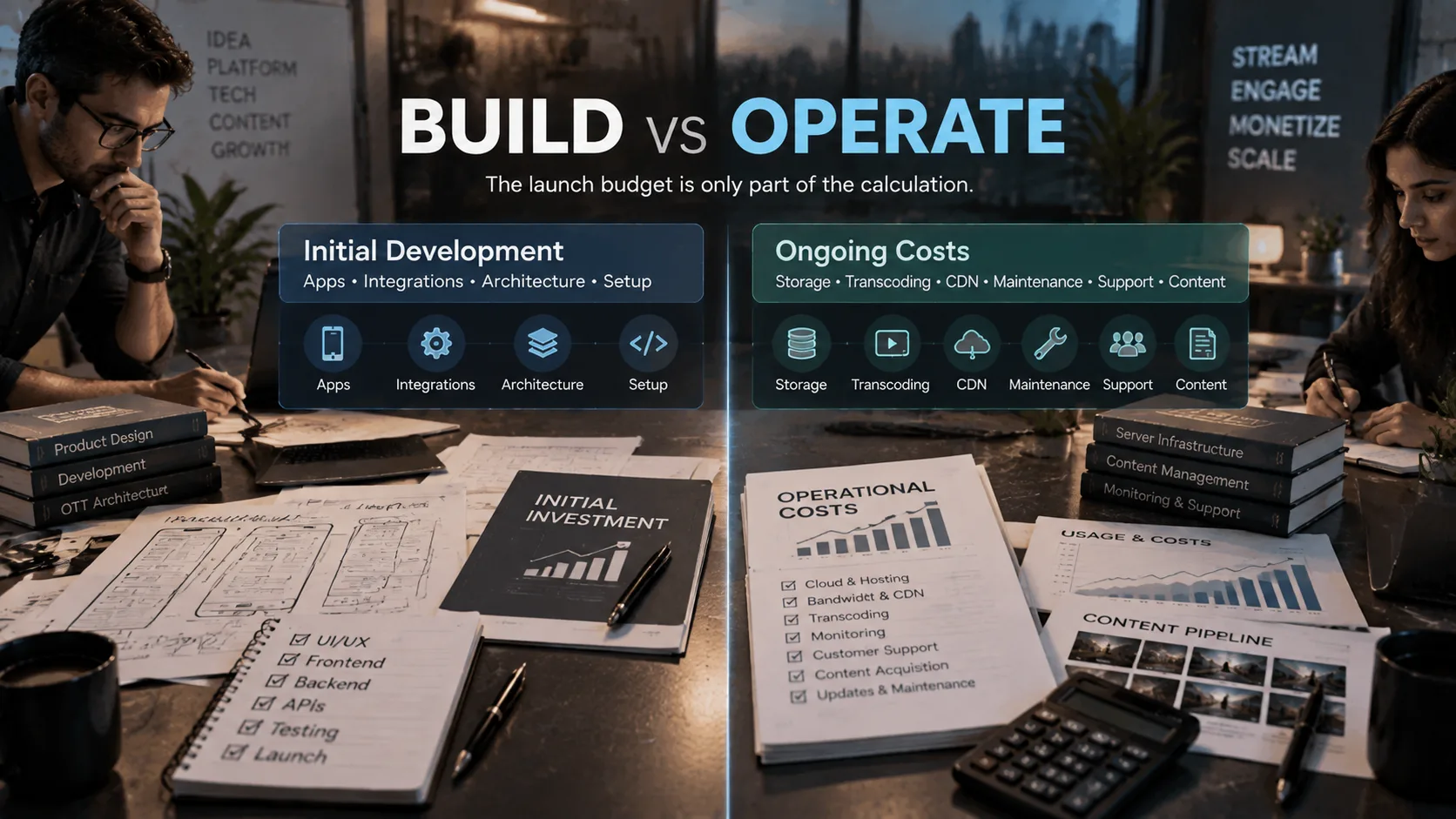
Building the platform and operating the platform are two different cost questions.
A business might invest a lot in the part of creating something but then find out that bandwidth, storage, changing videos, keeping track of things helping customers and managing content are just as important for the money they need over time. A business might invest a lot in the part of creating something but then find out that bandwidth, storage, changing videos, keeping track of things helping customers and managing content are just as important, for the money they need over time.
How Much Do Apps Add to the Budget?
Device coverage can significantly change the scope of an OTT project.
A service that starts with a responsive web application has a different development workload from one that launches simultaneously across:
- Web
- iOS
- Android
- Android TV
- Apple TV
- Roku
- Fire TV
- Smart TVs
Every extra platform brings development, new testing, new maintenance and new release‐management. The viewing experience must stay the same. A mobile interface built for touch cannot be copied onto a television where people use a remote. That is why the OTT platform architecture should be planned before any application is built.
Does Monetization Increase the Cost?
Usually, yes.
A basic content library is relatively straightforward compared with a service that needs several commercial models.
For example, a subscription platform may need:
- Recurring billing
- Subscription tiers
- Payment processing
- Entitlement rules
- Account management
- Cancellation and renewal handling
An ad-supported service brings in another part that includes ad space and how ads are shown.
A service that handles transactions might require steps for buying or renting.
A FAST service includes scheduled shows and the way ads are managed.
The way money is made needs to be chosen instead of being added after everything is built.
What Does Security Add to OTT Development?
Security should not be regarded as a feature that is only added before launch. Depending on the type of content and the business model an OTT service may need authentication, authorization, secure video delivery, entitlement management, geographic restrictions, payment protection, administrative controls and monitoring. Content rights can also bring their set of demands. A service that carries premium programming may have contractual obligations that do not apply to a small internal video library. Those obligations should be reviewed with legal and rights teams before any implementation takes place.
Build From Scratch or Use a Turnkey Platform?
This decision can have a major effect on both the initial budget and ongoing workload.
Approach : Initial development work : Ongoing responsibility
Build from scratch : High : Infrastructure, maintenance, integrations, updates
Use existing OTT infrastructure : Lower custom development requirement : Configuration, integrations, operations
Hybrid : Depends on what is customized : Shared between platform and internal team
Building everything inside a company gives the company control over how the system is built but it also means the company must keep many parts running. A turnkey approach can make the system easier to set up. Can cut the amount of work the company has to do on its own. However the turnkey approach does not take away the company’s need to decide on business, content, rights, security or technical matters.
For businesses evaluating existing OTT platform capabilities, the key question is which parts need to be customized and which parts can be handled by existing infrastructure.
What Are the Ongoing OTT Costs?
The launch budget is only part of the calculation.
A realistic financial plan should account for:
Infrastructure
- Storage
- Transcoding
- CDN delivery
- Databases
- Monitoring
Product
- Application maintenance
- Bug fixes
- New device support
- Security updates
Content
- Licensing
- Production
- Metadata
- Subtitles and captions
Operations
- Customer support
- Technical monitoring
- Platform administration
Commercial
- Payment processing
- Advertising technology
- Marketing and acquisition
Cloud costs can go up a lot when usage increases. AWS says that CDN costs depend on things, like how traffic there is, where users are located, how often requests happen and how much traffic happens at peak times.
Can an OTT Platform Be Built With a Smaller Initial Budget?
Yes, if the first release is deliberately limited.
Instead of launching every application and monetization model at once, a business might start with:
- One primary audience
- A focused content library
- Web and one mobile platform
- One monetization model
- Basic analytics
- Essential security
- A smaller geographic market
Once the service has viewing data the company can choose where more money should be spent.
This is usually simpler to handle than trying to guess all the things the business might need before any customer has ever tried the platform.
How Can StreamPlay Affect the Development Equation?
Using an existing OTT infrastructure can change what a company has to develop and maintain internally.
StreamPlay provides an OTT platform environment for businesses building streaming services, allowing teams to focus their development effort around the parts of the product that are specific to their audience and business model.
For projects that require system-level connections or custom integrations, the Developer API can also be relevant.
The actual cost still depends on the selected workflow, configuration, content requirements, applications, integrations and expected usage. A platform decision should therefore be evaluated against the project rather than compared only on an initial development figure.
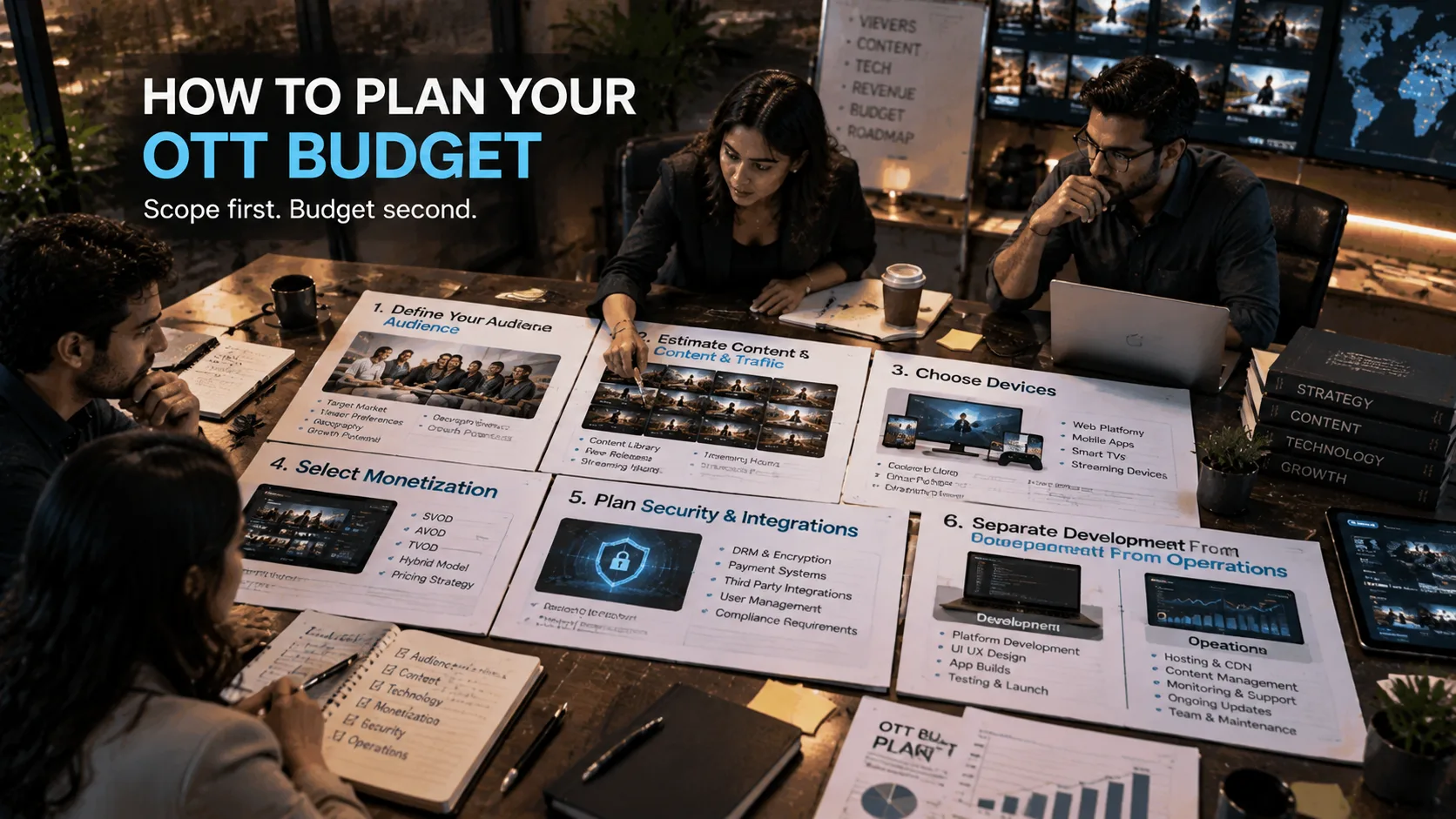
How Should You Calculate Your OTT Budget?
Before asking a development team for a quote, create a simple requirements list.
Define:
- Number of supported devices
- Number of hours of content
- Live, VOD, or both
- Expected audience size
- Target countries
- Subscription, advertising, transactional, or hybrid monetization
- Required integrations
- Security and rights requirements
- Analytics requirements
- Internal team capabilities
Then split the budget into development, infrastructure and ongoing operations.
This creates a clearer view, than just looking at one main development cost.
Final Thoughts
The cost of building an OTT platform in 2026 depends less on the word OTT and more on the scope that lies behind it.
A focused VOD service can have a different budget compared with a global multi‐device platform that carries live sports, premium content, advertising and many subscription tiers.
The useful approach is to first define the audience, the content, the devices, the way to make money and the technical requirements.
From there a business can decide which parts should be built inside the company and which can be managed through existing OTT infrastructure.
For official company updates and OTT platform insights, follow StreamPlay on LinkedIn.
Planning to launch or modernize an OTT platform?
StreamPlay helps media companies, sports leagues, and broadcasters launch branded OTT aggregator apps with CMS, monetization, discovery, and multi-device support.
Frequently Asked Questions
How much does it cost to build an OTT platform in 2026?
I have seen no development price. The cost depends on applications, content workflows, infrastructure, monetization, security, integrations. Expected viewing traffic.
What is the biggest ongoing OTT expense?
I have seen OTT expenses vary by service. Video delivery, storage, transcoding, content licensing, application maintenance and customer operations can all become costs depending on usage and business model.
Is building an OTT platform from scratch expensive?
I have seen OTT platforms become expensive particularly when the business develops its applications, video infrastructure, CMS, authentication, payments, analytics and delivery systems. The scope of the release has a major effect on development cost.
Can a turnkey OTT platform reduce development costs?
I have seen turnkey OTT platforms reduce the amount of infrastructure and custom functionality a business needs to develop itself. However configuration, integrations, content operations, security and business decisions still require work.
Does the number of viewers affect OTT costs?
Yes, I have seen that. More viewers generally mean video delivery and infrastructure usage. CDN and data-transfer costs can vary according to traffic volume, geographic distribution and usage patterns.
Does supporting TVs increase development costs?
Usually yes. Each additional application environment requires development, testing, maintenance and ongoing compatibility work.
Should an OTT business calculate development and operating costs separately?
Yes. Development is primarily an investment while infrastructure, content, support, maintenance and delivery can continue throughout the life of the service. I have seen this happen often.