What Is an OTT Platform? Complete Guide for 2026
Learn what an OTT platform is, how it works, its key components, business models, and what to consider before launching a streaming service.

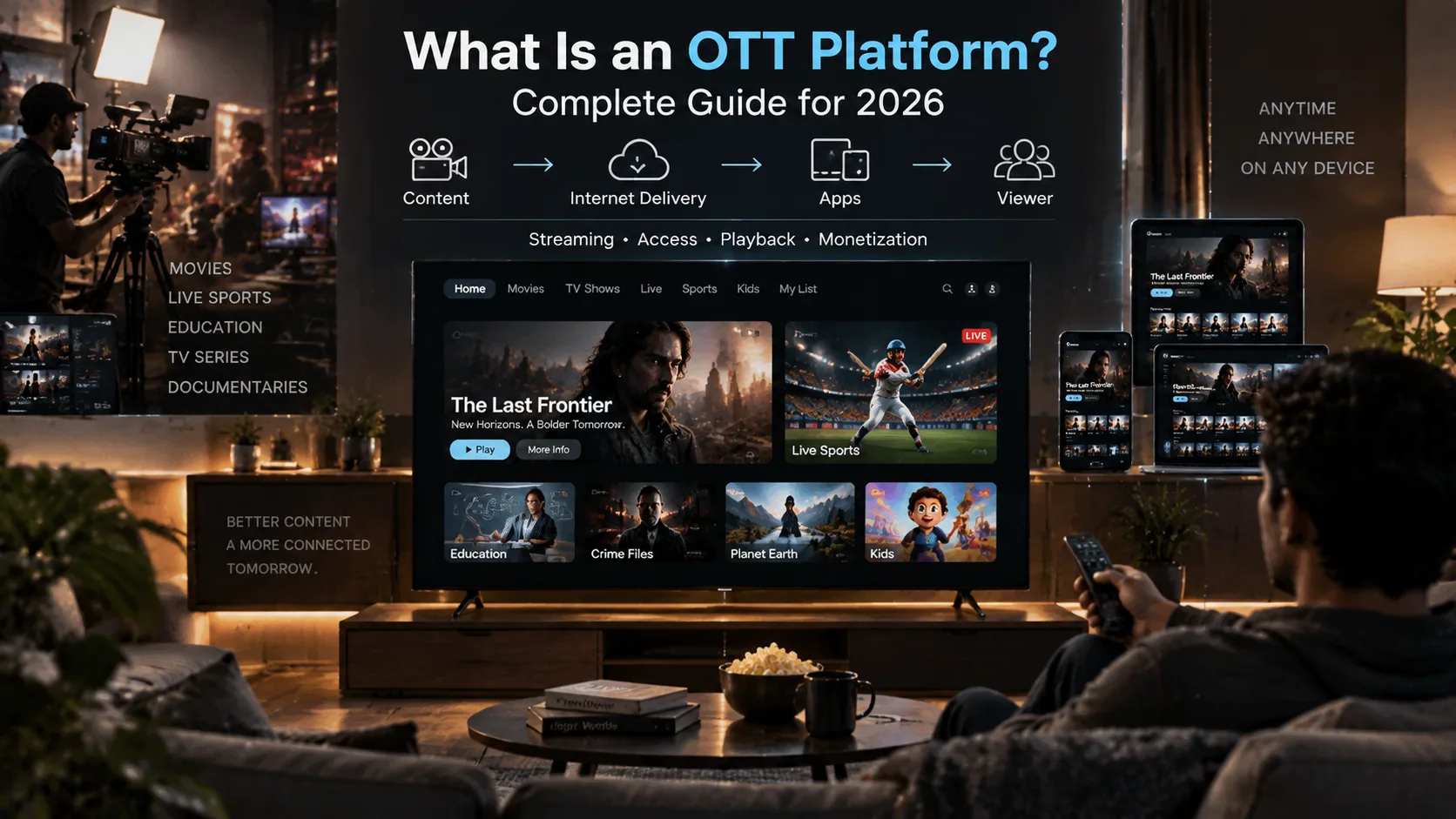
Table of contents
What Is an OTT Platform?
A viewer opens an app, picks a series and begins watching in a few seconds. On the surface OTT platform looks simple. Behind that experience however a streaming operator may be handling video files, metadata, user accounts, access rules, playback, devices, subscriptions and content rights.
That is where the OTT platform comes in. If you are wondering what an OTT platform is, the simplest explanation is that an OTT platform is the technology foundation used to deliver video content to viewers, over the internet. OTT platform can support movies, series, live events, sports, educational programming, short-form video and other types of content.
The exact setup depends on what the service offers and how viewers are expected to use the OTT platform.
Quick Answer
An OTT platform is the technology infrastructure that delivers video content to viewers over the internet instead of traditional cable, satellite, or broadcast TV. It brings together content management, video processing and delivery, user accounts, subscriptions, access control, playback, and viewer experience. OTT platforms can support movies, series, live events, sports, education, and short-form content, with monetization through subscriptions, advertising, transactions, or hybrid models. Before choosing an OTT platform, businesses should consider their audience, content, supported devices, monetization model, access requirements, operations, and content rights.
What Does OTT Mean?
OTT means over‐the‐top. OTT is a word that tells me video is sent through the internet not through cable, satellite or broadcast television systems.
An OTT service can show up on a website, an app, a connected TV app or on many of these at the same time. Viewers can watch content on any supported device. They do not need a traditional TV channel.
For the operator an OTT platform pulls parts of the service together. OTT content must be prepared, organized , delivered and shown in a way that makes sense to the audience.
That is why an OTT platform is more than a video player.
How Does an OTT Platform Work?
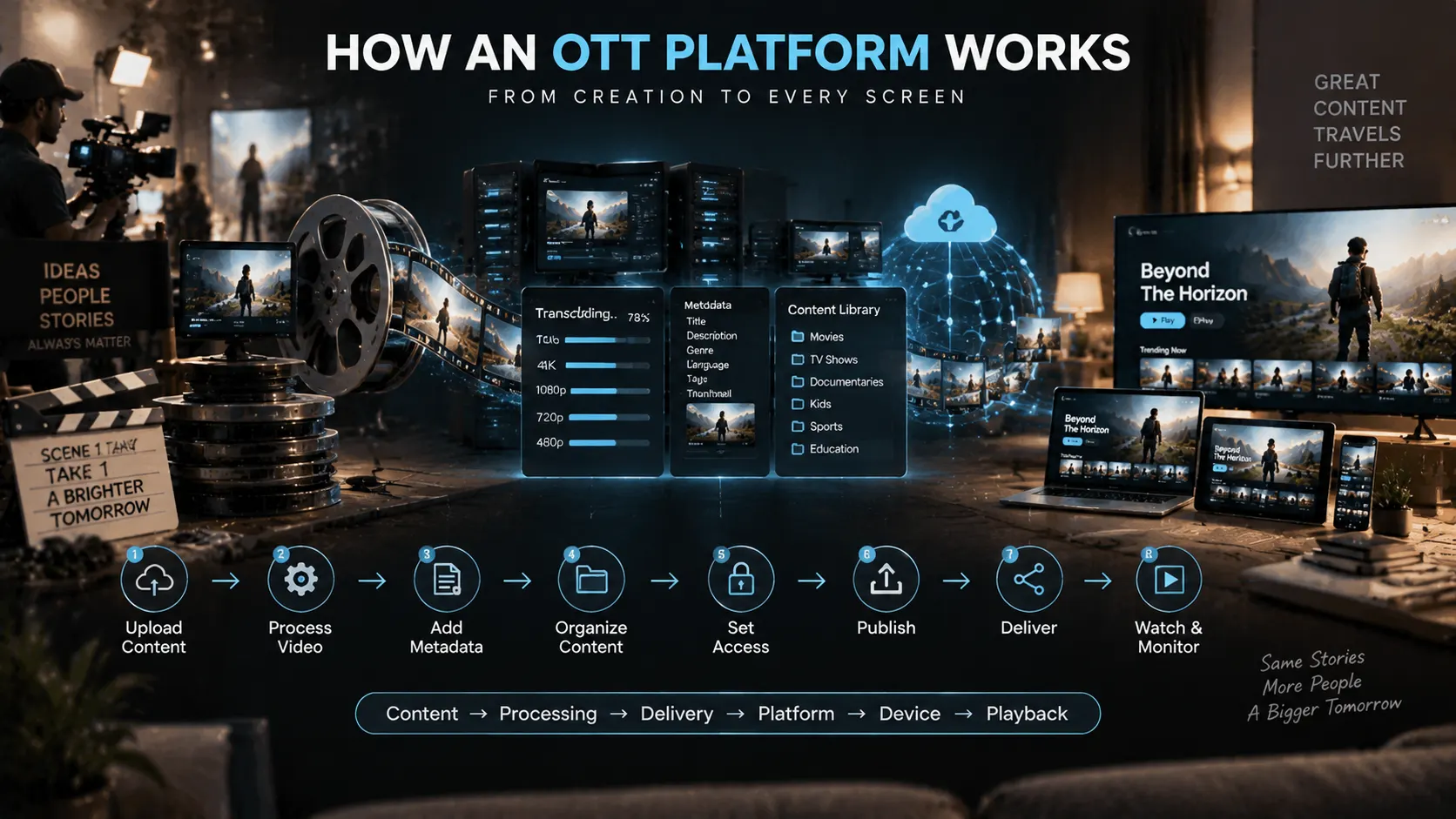
The basic workflow can be represented as:
Content → Processing → Storage/Delivery → Platform → User Device → Playback
Take a small production company releasing a six-episode documentary series. The team might need to:
- Upload the original video files.
- Process the content for streaming.
- Add titles, descriptions, artwork, and metadata.
- Organize the episodes into a series and season.
- Configure subscriptions or other access rules.
- Publish the content.
- Test playback across supported devices.
- Monitor the viewer experience after launch.
The technical architecture can vary, but the operational principle remains similar: content has to move reliably from the production side to the viewer-facing experience.
Key Components of an OTT Platform
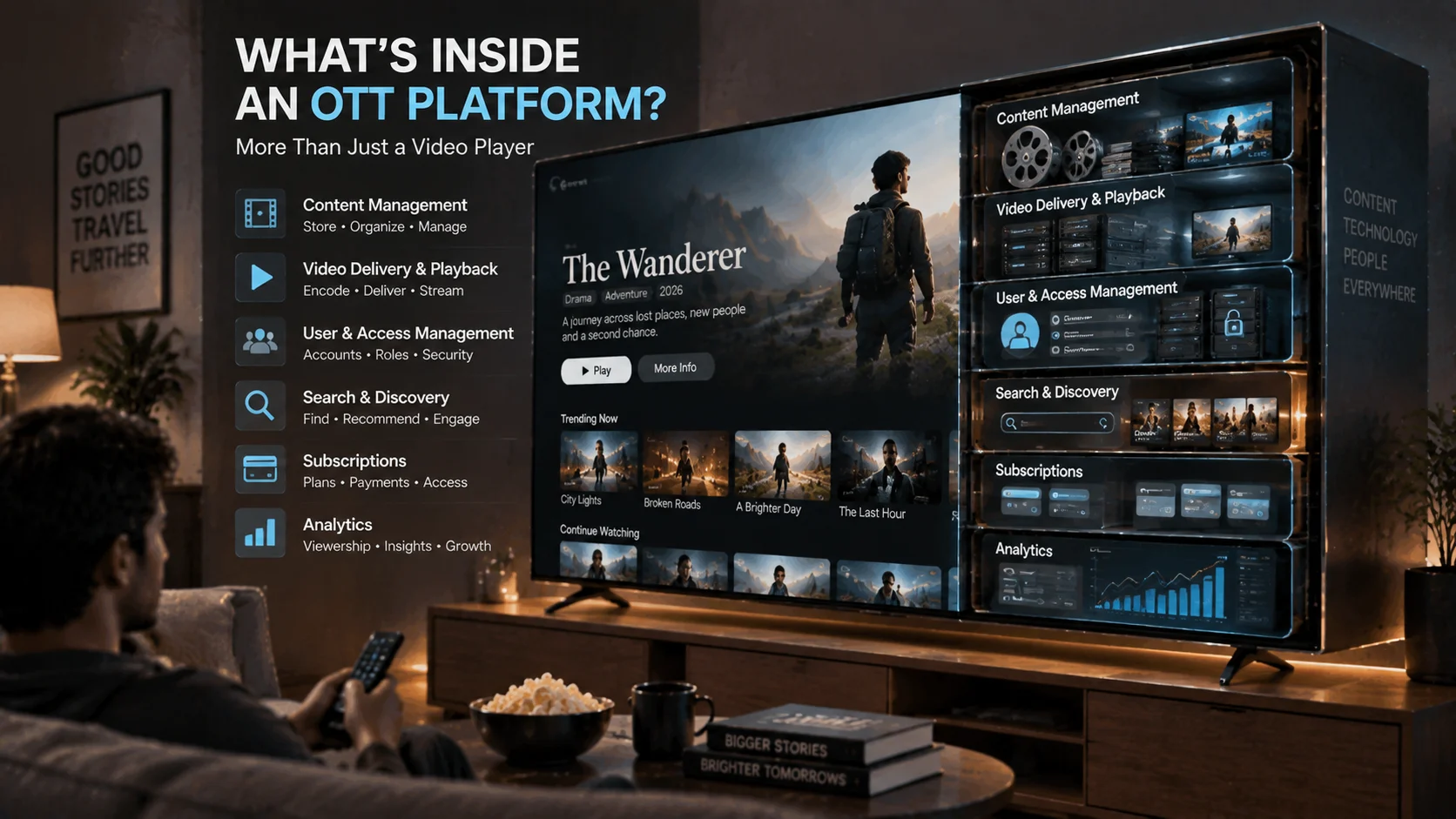
A complete OTT platform normally connects several operational areas.
Content Management
Content management is the foundation of the catalog. Operators need to upload videos, organize them, add metadata, update information, and control what is published.
For episodic programming, a simple structure could be:
Series → Season → Episode → Video Asset → Metadata
As the catalog grows, consistent organization becomes increasingly important.
Video Delivery and Playback
Video has to be processed and delivered in formats that the devices can handle.
Video playback can also be affected by the viewer device by network conditions and by the delivery architecture.
This makes the viewing experience depend on more than just the player interface itself.
User and Access Management An OTT service may need accounts, authentication, subscriptions, payments, profiles, or other entitlement rules.
A subscription workflow might look like:
Create account → Select plan → Complete payment → Verify entitlement → Access content
The exact implementation depends on the service's business model and access requirements.
Viewer Experience
The platform also needs to help viewers find something to watch.
Search, categories, content pages, navigation, recommendations, playback controls and account management all contribute to the experience of the platform. A working service can still be difficult to use if viewers cannot quickly find the content viewers want.
For teams evaluating OTT platform capabilities it is useful to consider how these parts fit together for the platform rather than looking at playback in isolation.
What Types of OTT Platforms Can Businesses Build?
There is no single OTT format.
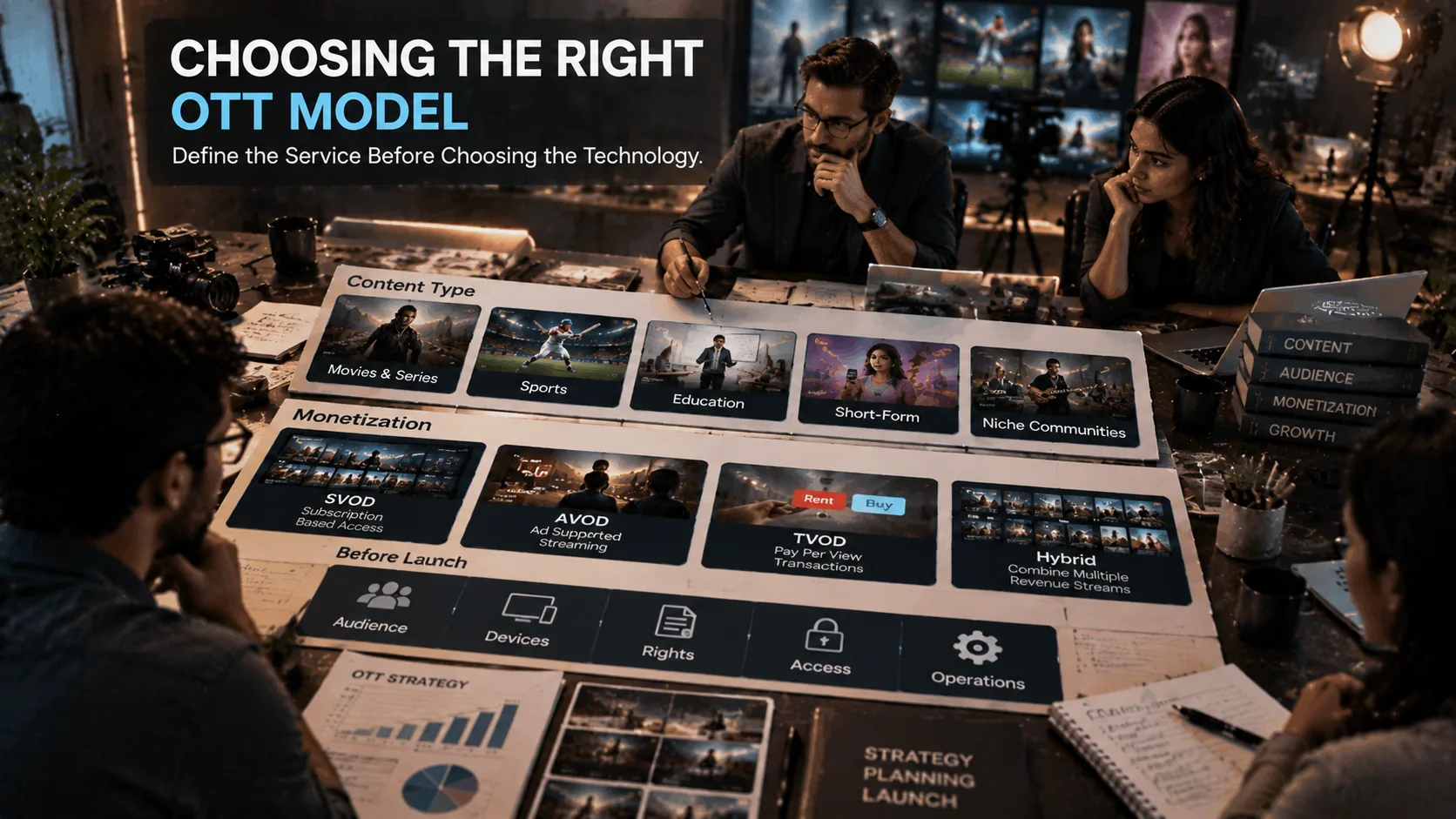
A service could focus on:
- Movies and television series
- Live sports and events
- Educational or training content
- Short-form programming
- Niche or community-based video
- Premium subscription libraries
- Advertising-supported content
I observe that technology requirements can change a lot from one model to another.
I see that a sports service may need a workflow that is built around scheduled events, monitoring, viewer access and post‐event handling. I notice that an educational service that has a VOD catalog may put more emphasis on content organization, search, categories and long‐term library management.
How Do OTT Platforms Make Money?
Several monetization models are commonly used in OTT services.
SVOD — Subscription Video-on-Demand: Viewers pay a recurring subscription to access a catalog.
AVOD — Advertising Video-on-Demand: Content is offered with advertising providing the commercial model.
TVOD — Transactional Video-on-Demand: Viewers pay for individual movies, programs, events, or other content.
Hybrid models: Some services combine subscriptions, advertising, transactions, or other approaches.
The appropriate model depends on the audience, content rights, pricing strategy, and type of service being operated.
OTT Platform vs Traditional TV
The biggest difference is distribution.
Traditional television commonly depends on broadcast, cable or satellite infrastructure. OTT uses internet connectivity to deliver the viewing experience.
That difference gives OTT services flexibility around devices, catalogs, content packaging and access. At the time it introduced additional digital operations.
An OTT operator may need to manage content metadata, user accounts, subscriptions, applications, playback, access permissions, analytics and technical integrations.
For teams that want to evaluate the streaming service infrastructure, looking at the complete operating workflow is more useful, than comparing individual features in isolation.
What Should You Consider Before Launching an OTT Service?
Technology should come after the basic service requirements are understood. Start by defining:
Area: Audience
Question to Answer: Who is the service for?
Area: Content
Question to Answer: What will viewers watch?
Area: Devices
Question to Answer: Where should viewers be able to watch?
Area: Monetization
Question to Answer: Subscription, advertising, transactions, or another model?
Area: Access
Question to Answer: How will accounts and entitlements work?
Area: Operations
Question to Answer: Who manages content and publishing?
Area: Rights
Question to Answer: Does the business have permission to distribute the content?
I think this final point is very important. Just because you can stream a video does not mean you have the right to share video. You must separately review the video rights, territories, licensing rules and any contractual limits.
Build From Scratch or Use an OTT Platform?
Building everything on your own can give you control over how the system's designed and how different parts work together but it also means you have to take care of more parts yourself.
A group might need to think about video processing, how videos are sent out, how people log in, managing the content of the apps that people use, handling payments, looking at data, keeping things safe and keeping everything running over time.
Using a solution or a version that is already made can cut down on the amount of building that needs to be done inside the company. By making every part, on their own the team can adjust an existing OTT platform to fit their content and how they run their business.
No method takes away the need to plan. The big question is which way works best for the team's skills, how they handle their content, their business plan and when they need to start.
A Practical Way to Evaluate an OTT Platform
Rather than starting with a feature checklist, test one real piece of content from beginning to end.
For example:
Upload → Process → Add Metadata → Organize → Set Access → Publish → Watch → Review
Check each stage.
Can the content team organize the title correctly? Does the metadata show up as it should? Can the person who is supposed to see the content actually access it? Does playback function properly on the devices that are supported? Can the team. Fix a problem without causing issues in other parts of the content?
If the process works with an example it gives a clearer idea of how the platform functions, than just listing all its features.
Common OTT Platform Mistakes
One common mistake is to treat OTT development as building a video player. OTT development is more than that.
The player matters. Ott development also needs catalog management, access control, metadata, applications, publishing workflows, support and rights management.
Another mistake is to choose technology before defining the service. A live sports platform and an on-demand documentary library are both OTT services. They need very different operations.
It is also important not to assume every platform feature is ready for a business process. Integrations, payment systems, security controls, application deployment, content rights and editorial workflows may need setup and approval.
Final Thoughts
An OTT platform is the technology layer behind an internet‐based streaming service. It connects content management, video delivery, viewer access, playback and the operational processes required to keep the service running.
The best starting point is not a list of features. First define the audience, content, business model, supported devices, rights and publishing workflow. Then evaluate the technology against those requirements.
A useful test is simple: take one piece of content and trace its journey from upload to viewer playback. That exercise often reveals the requirements much faster, than evaluating an OTT platform on paper.
For more platform updates and OTT insights, follow StreamPlay on LinkedIn.
Planning to launch or modernize an OTT platform?
StreamPlay helps media companies, sports leagues, and broadcasters launch branded OTT aggregator apps with CMS, monetization, discovery, and multi-device support.
Frequently Asked Questions
What is an OTT platform?
An OTT platform is a kind of technology that delivers video to viewers over the internet using traditional TV distribution. An OTT platform can carry movies, series, live events, sports, educational programs and many other types of shows.
How does an OTT platform work?
An OTT platform usually receives content processes it organizes, delivers it and then plays it back. Depending on its configuration an OTT platform may also manage users, subscriptions, payments, metadata and rules that decide who is allowed to watch.
What is the difference between an OTT platform and a streaming service?
A streaming service is what the viewer sees and uses. An OTT platform is the technology that runs and delivers that service.
Can OTT platforms support streaming?
Yes. An OTT platform can carry events such as sports, conferences, entertainment and other live broadcasts. Live content usually requires a workflow that's different from recorded VOD.
How do OTT platforms make money?
An OTT platform can earn money through subscriptions, advertising and purchases of shows. Some OTT platforms use one of these methods depending on who watches and what they show.
Can small businesses use an OTT platform?
Yes. An OTT platform can be built for content businesses, whether small. The right setup depends on the catalog, the audience, how the content is shared and the business model.
Does an OTT platform handle content rights?
Not automatically. An OTT platform is technology; content rights are an issue. Businesses must confirm that they own the rights and licenses, for the content they share.