How to Build an OTT Platform From Scratch in 2026
Learn how to build an OTT platform from scratch in 2026, from content planning and technology choices to apps, monetization, security, and launch.

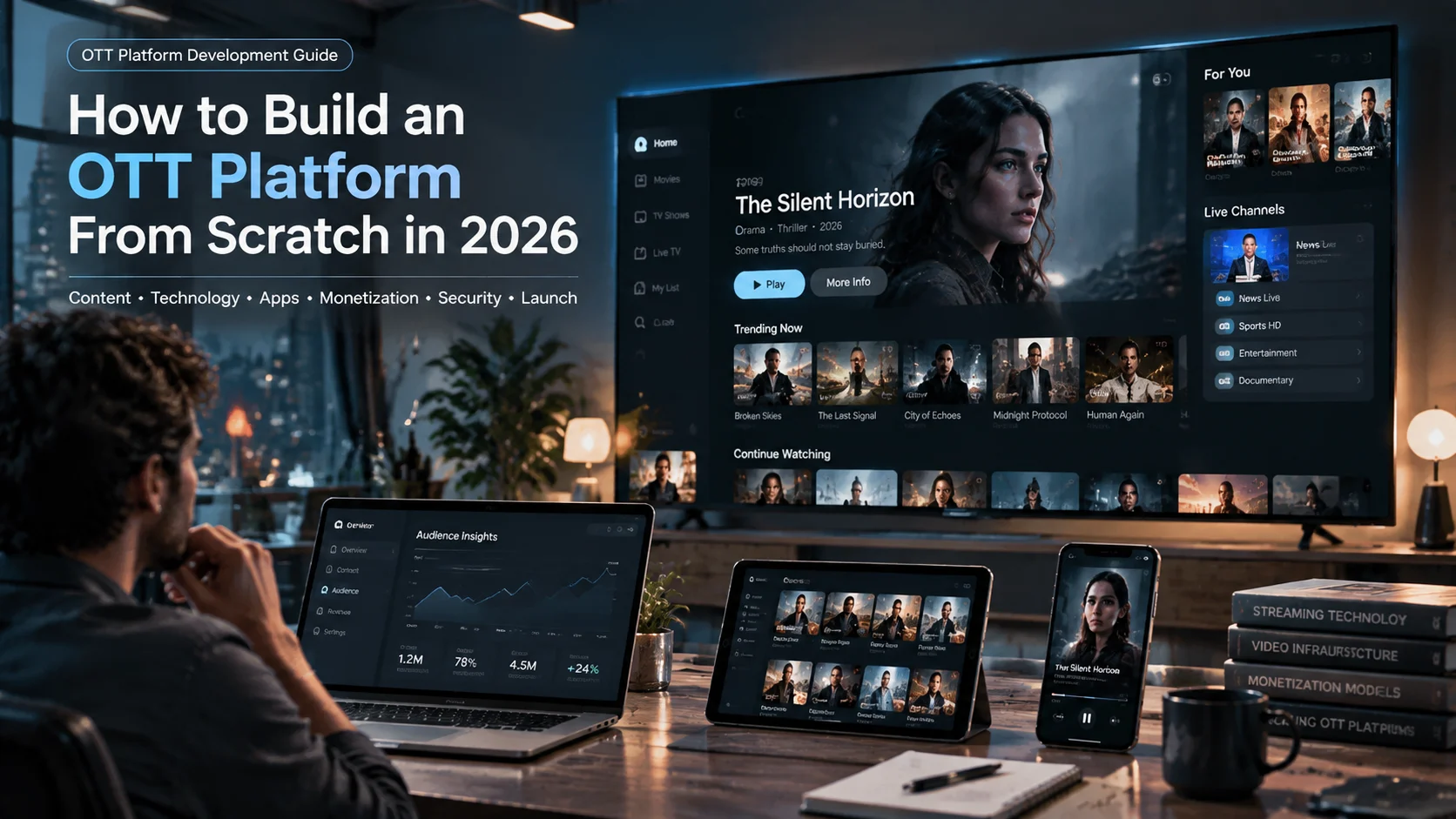
Table of contents
How to Build an OTT Platform From Scratch in 2026
A real OTT platform needs to handle content, users, playing videos, devices, money, details, about the videos, safety tracking how people use it and all the things that keep everything working. The choices made can affect how easily the OTT platform can grow in the future.
So how do I build an OTT platform from the beginning in 2026? I start with the business plan and the way the content will work. Then I check the technology, the way people use it, how to get money from it and what is needed to run it every day.
Quick Answer
What Should You Define Before Building?
A documentary company launching an on-demand library has requirements, from a sports business streaming live events. A regional entertainment service may need metadata and content organization while a niche subscription service may care more about membership and recurring payments.
Before development begins, define:- Who the target audience is- What type of content will be available- Whether the service is live, VOD, or both- Which countries or regions will be supported- How viewers will access the service- How the platform will make money- What content and distribution rights are available
This prevents a common problem: building technical capabilities before knowing which onesthe business actually needs.
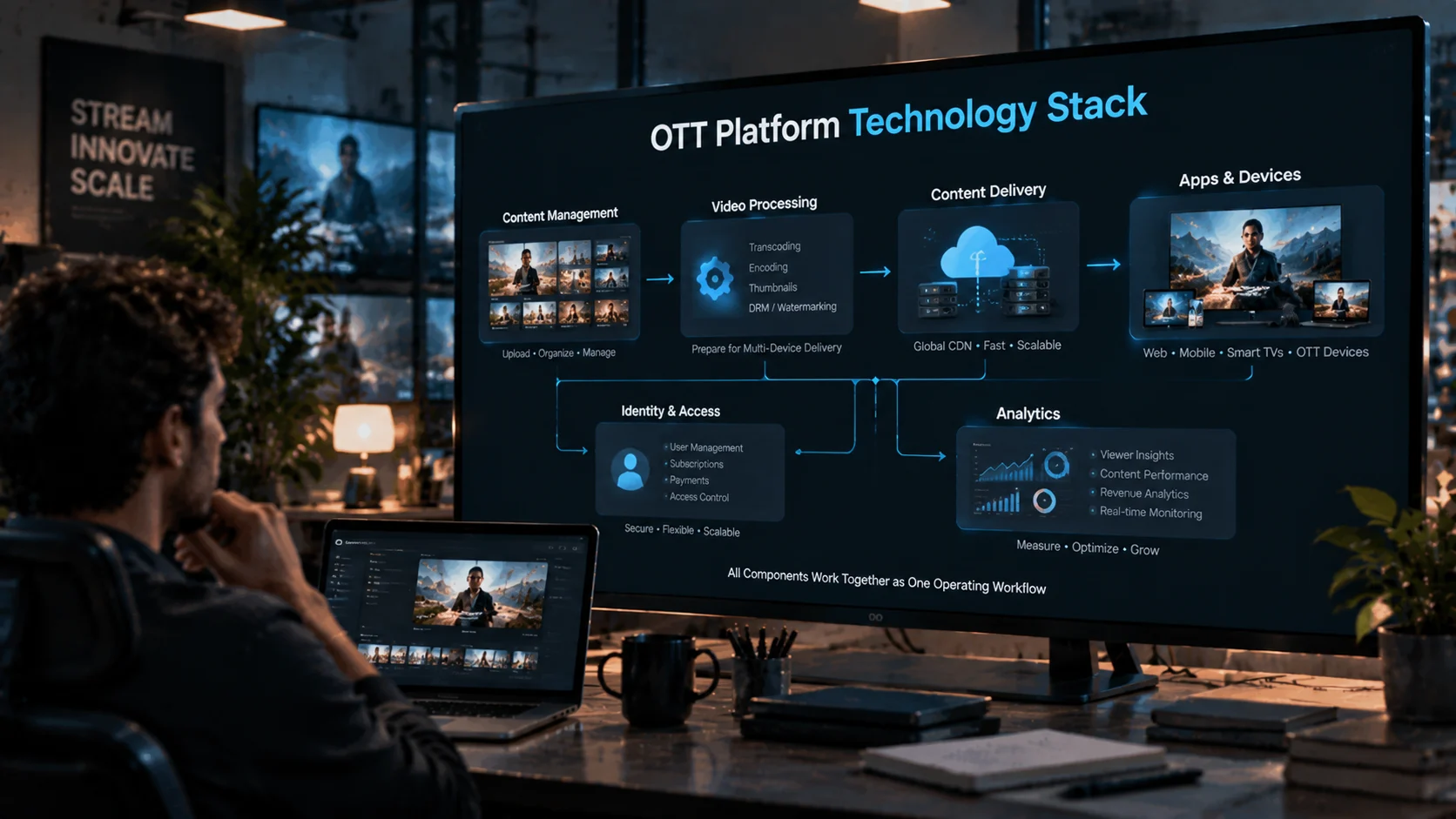
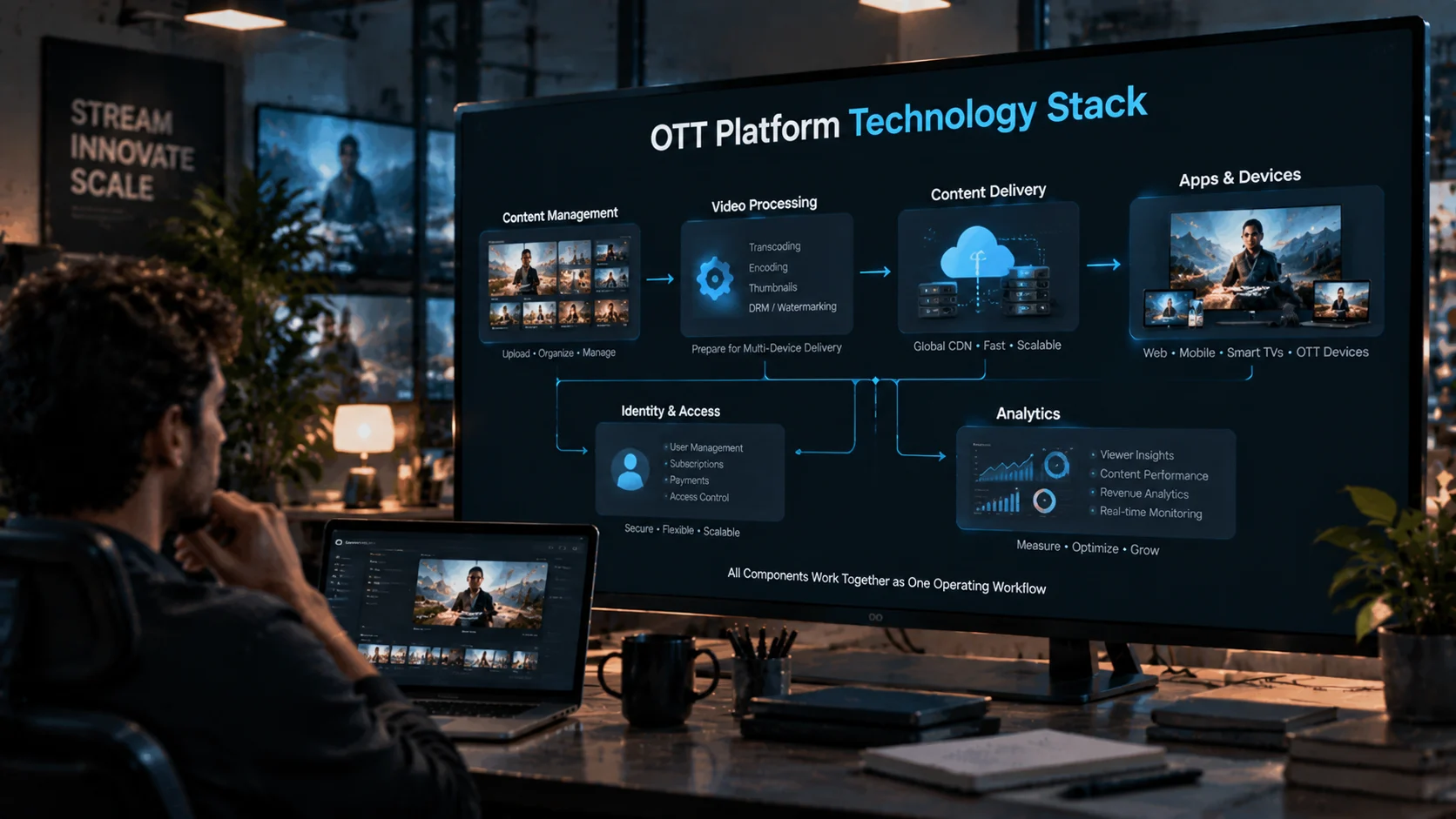
What Technology Does an OTT Platform Need?
Content management handles video files, metadata, artwork, categories, seasons, episodes, and publishing.
Video processing prepares uploaded media for streaming across different devices and network conditions.
Content delivery distributes video to viewers through a CDN or comparable delivery infrastructure.
Applications provide the viewing experience on web browsers, mobile devices, smart TVs, and other supported platforms.
Identity and access manage registration, authentication, subscriptions, entitlements, and account permissions.
Analytics provides information about viewing behavior, content performance, conversions, and other operational measurements.
These pieces do not have to be developed independently. The important thing is that they work together as one operating workflow.
Should You Build Everything Yourself?
Approach :: What it involves :: Main consideration
Build from scratch :: Develop and integrate the major platform components yourself :: More control, but greater development and maintenance responsibility
Use a turnkey or white-label platform :: Start with existing OTT infrastructure and configure the service around it :: Faster path to launch, with less infrastructure to build yourself
Building from scratch can make sense when a company has technical needs or wants a lot of control over how everything is set up.
A turnkey approach can cut down on building things from the ground up. It still requires careful thinking. Things like content rights, brand identity, how money's made safety, the kinds of devices that are supported and the rules for the business all still need to be looked at.
How Should You Plan the Content Workflow?
A basic VOD workflow might look like this:
Upload → Process → Add Metadata → Organize → Publish → Deliver → Measure
For example, picture a company that has bought the rights to a six‐episode documentary series.
The team must upload the video files, set them up for streaming, add episode titles and descriptions, create artwork, set the correct series structure mark when the series is available and test playback before publishing.
If the metadata is incomplete the videos might be technically available but still hard for viewers to find.
That is why content operations should be designed with the platform instead of being treated as a simple administrative task, after development.
What Monetization Model Should You Choose?
Common options include:
- SVOD: viewers pay a recurring subscription
- AVOD: viewers watch content supported by advertising
- TVOD: viewers pay for individual titles or events
- FAST: viewers access scheduled programming for free while advertising supports the service
- Hybrid models: a combination of subscription, advertising, transactional, or free content
The choice should follow the content and audience.
A premium niche library may fit a subscription model. A large catalogue with broad appeal could support advertising. A major individual event may be better suited to a transactional model.
What About Apps and Device Support?
Decide which devices matter before development starts.
Depending on the audience, this could include:
- Web
- iOS and Android
- Smart TVs
- Streaming devices
- Tablets
Each environment introduces its own interface and testing considerations.
For a connected-TV application, for example, navigation needs to work naturally with a remote control. A mobile application has different expectations around screen size, touch interaction, and network conditions.
How Should Security and Access Be Handled?
An OTT service could need to manage authentication, subscription status, content access, location-based rules, secure video playing, payment information and access, for administrators.
The exact needs vary depending on the kind of content and the way the business works.
A platform that shares high-quality content could also have contract-based security responsibilities that a small internal video collection does not. These responsibilities need to be checked by the rights teams before the launch.
How Can StreamPlay Fit Into the Build Process?
StreamPlay provides an OTT platform environment that can help businesses manage the infrastructure and workflows involved in launching a streaming service.
Its Features page provides an overview of the platform capabilities that can be considered when planning an OTT service.
For teams building integrations or connecting their own systems, the StreamPlay Developer API can also be relevant when the project requires API-based workflows.
The right setup still depends on the service being built. Platform configuration should be reviewed against business requirements, content rights, security requirements, technical architecture, and the intended launch markets.
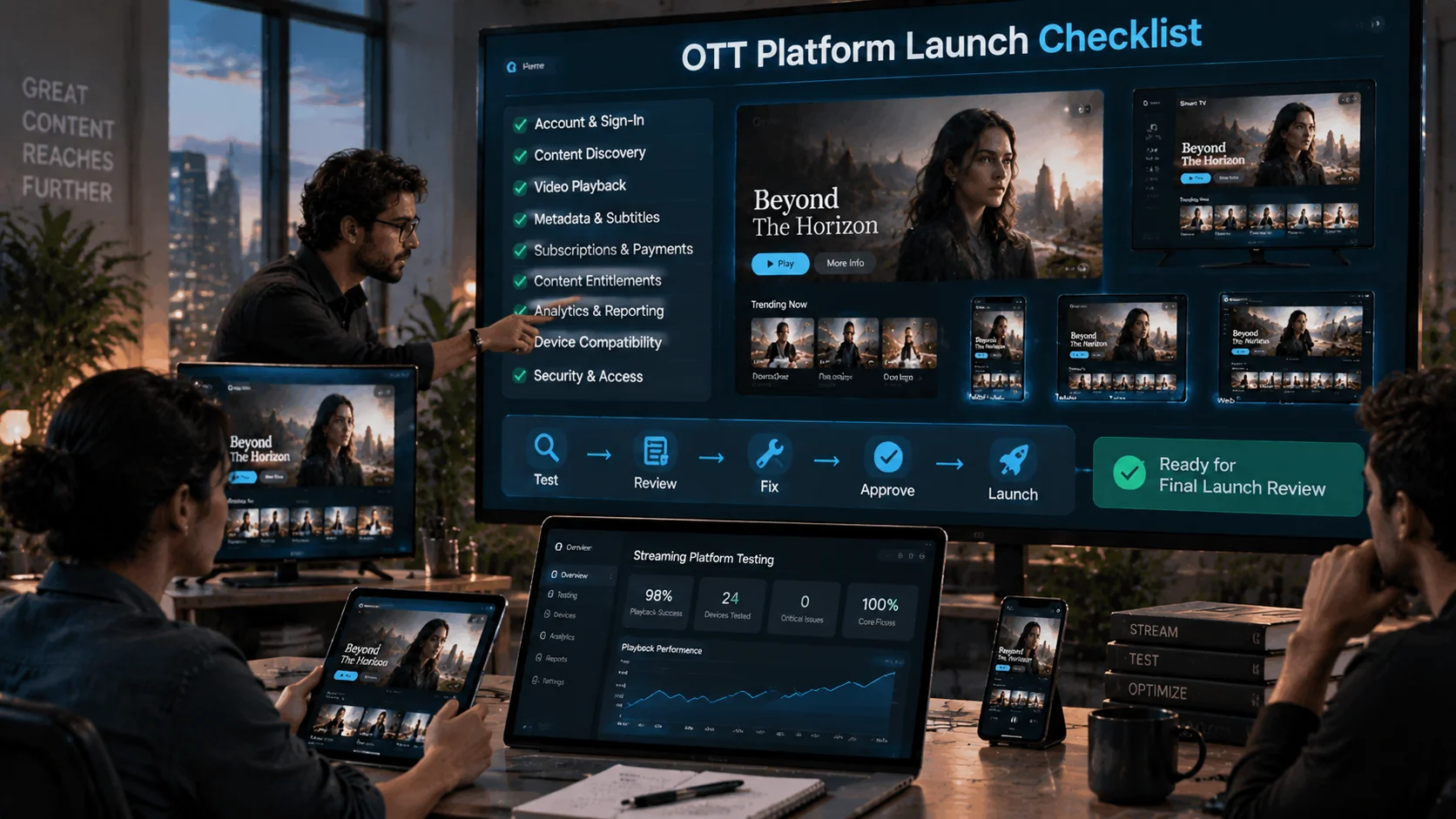
What Should You Test Before Launch?
Run through the complete viewer journey:
- Create an account.
- Sign in on each supported device.
- Find a piece of content.
- Start playback.
- Test different network conditions.
- Check subtitles, metadata, artwork, and episode information.
- Test subscription or payment flows where applicable.
- Verify content entitlements.
- Check analytics and reporting.
- Confirm that restricted content cannot be accessed incorrectly.
A small test group can reveal problems that're hard to spot during development. If viewers can't find an episode or playback fails, on a TV or an entitlement rule doesn't work right fixing these issues before launch is much easier. It's more difficult and costly to handle these problems after a marketing campaign has already brought a lot of people to the service.
What Does It Take to Launch an OTT Platform?
A practical launch plan should cover:
Audience and content → Platform architecture → Content workflow → Apps and devices → Monetization → Security and rights → Testing → Launch
The order can change based on the project. Every area must have a person in charge and a clear way to get approvals.
Just because a platform works technically doesn’t mean it’s ready to launch. The business, editorial, rights, security, payment and technical teams might each need to check parts of the service. Each team will look at what matters to them. It’s not just about code or features. It’s about making sure everything fits together for use.
Final Thoughts
I see that the strongest projects start with an audience and a clear content strategy. Then the team picks technology that fits those needs.
I also notice that whether a business picks custom development, a turnkey platform or a mix of both the same fundamentals remain. Those fundamentals are video delivery, organized content, helpful discovery, secure access, fair monetization and a viewing experience that works on the devices the audience really uses.
For official company updates and OTT platform insights, follow StreamPlay on LinkedIn.
Planning to launch or modernize an OTT platform?
StreamPlay helps media companies, sports leagues, and broadcasters launch branded OTT aggregator apps with CMS, monetization, discovery, and multi-device support.
Frequently Asked Questions
How long does it take to build an OTT platform?
There is no fixed timeline. The duration depends on the number of applications, content workflows, integrations, monetization models, device targets and custom functionality required.
Can I build an OTT platform without developing everything from scratch?
Yes. A turnkey or white label OTT platform can provide existing infrastructure and capabilities that a business can configure around its content and audience. Custom development can still be added where specific requirements call for it.
What content can an OTT platform support?
An OTT platform can support types of video including movies, series, documentaries, educational content, live events, sports and short-form programming. The available formats depend on the platform architecture and content workflow.
Which monetization model should an OTT platform use?
It depends on the audience, content and business model. Subscription, advertising, transactional, FAST and hybrid approaches can all be appropriate in situations.
Do I need apps for every device?
Not necessarily. Device support should be based on where the target audience watches. A service may start with web and mobile applications. Expand to connected-TV platforms as its requirements develop.
What is the important thing to test before launch?
Test the journey, then playback alone. Account access, content discovery, playback, metadata, subscriptions, entitlements, analytics and device compatibility should all be checked.
Is building an OTT platform a project?
No. Technology is one part of the process. Content rights, editorial operations, monetization, security, business requirements, customer support and launch planning also need to be addressed.