
The "Snappy" Experience: Why Platform Performance Matters for Software and App Development
Discover why platform performance is critical for software and app development. Learn how speed, responsiveness, and optimization improve user experience, retention, and business growth

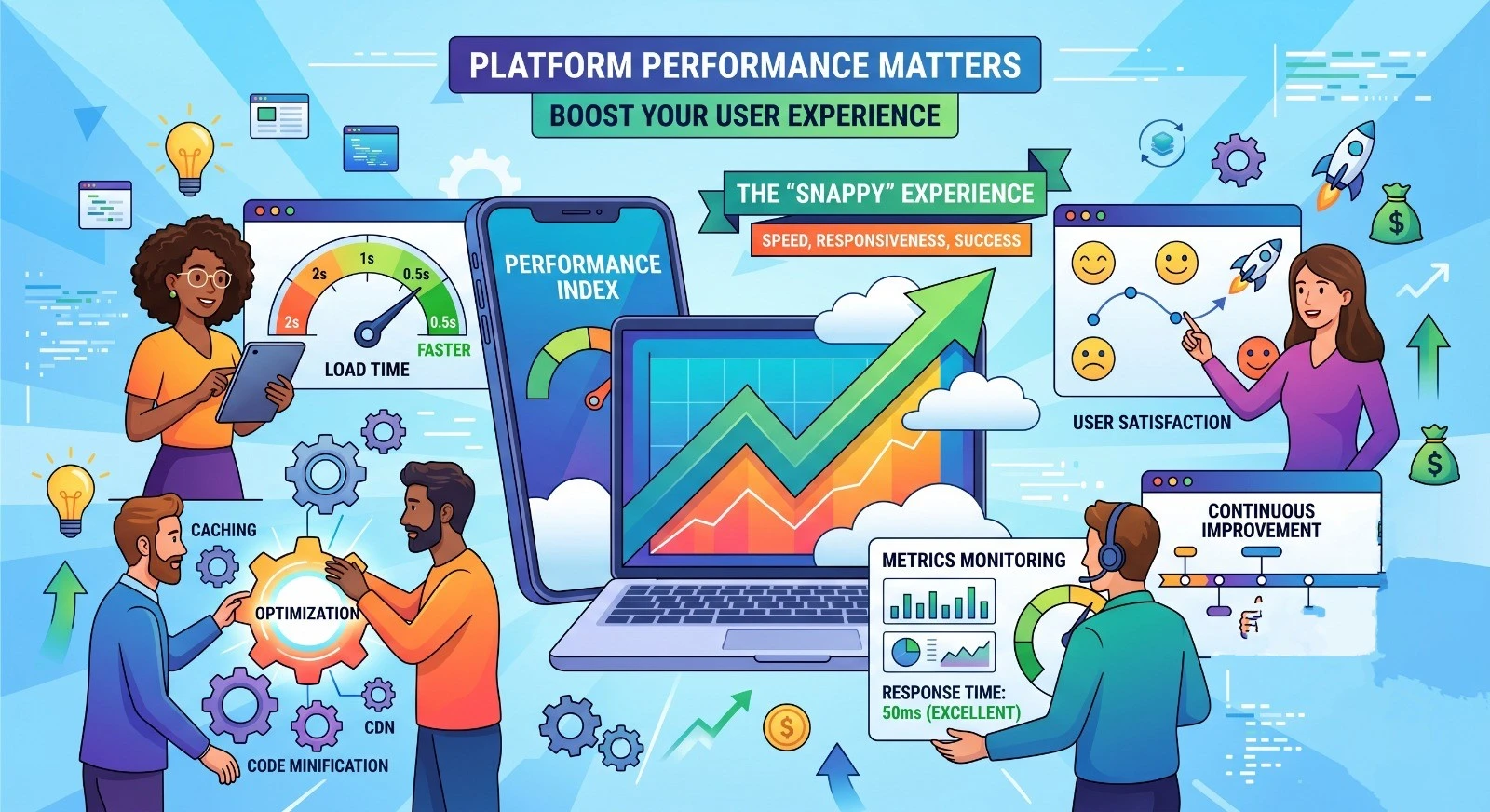
Table of contents
The term "snappy" captures what users want without needing to explain it. They want every tap, scroll, and search to feel instant and effortless. Whether you are building a fintech app, an ecommerce platform, or a logistics software solution, performance is what separates platforms people return to from ones they abandon after a single visit.
Companies working with top software development companies in USA understand this reality well. Speed and responsiveness directly influence user satisfaction, retention, and revenue, making platform performance one of the highest-leverage investments any digital product can make.
Why This Matters
Why snappy performance should be a top priority:
A one-second delay in load time can reduce conversions by up to seven percent
Nearly half of all users expect a page or app to load in two seconds or less
Slow platforms drive higher bounce rates and lower session durations
Mobile users on variable networks are especially sensitive to performance issues
Custom software development companies in USA consistently rank performance as a top client requirement
Core Concepts: What Makes a Platform Truly Snappy
Understanding the Components of Platform Performance
A snappy platform is not just about raw speed. It encompasses every interaction a user has — from the first page load to every button press, form submission, and content transition. Any friction in this chain reduces the sense of fluency that modern users expect from well-built digital products.
Key Points
Responsiveness captures how immediately interactive elements react to user inputs
Rendering speed determines how smoothly animations and transitions appear
Backend performance governs how fast servers and databases return requested data
Example Use Case
A fintech app development company building a payment or portfolio management tool faces especially high performance standards. Users executing financial transactions expect sub-second responses. Any lag creates doubt and erodes trust, which is why fintech application development teams invest heavily in backend optimization and efficient API design from the earliest stages of a project.
How Performance Affects Business Outcomes
Poor platform performance creates consequences that extend far beyond frustrated users. For any application development company in USA, underperforming products directly threaten client relationships, renewal rates, and referral pipelines.
Key Points
Brand perception suffers when a product consistently underperforms competitor offerings
Infrastructure costs often decrease when platforms are properly optimized
Superior performance becomes a genuine competitive differentiator in saturated markets
Example Use Case
An ecommerce app development company building a high-traffic retail platform must ensure that product pages, search results, and cart interactions load near-instantly during peak traffic periods. A Magento ecommerce development company, for example, invests in server-side caching, CDN configuration, and query optimization specifically to maintain that snappy feel during flash sales and seasonal demand spikes.
Key Factors That Affect Platform Performance
Understanding what drives or undermines performance is essential for any mobile software development company in USA building products at scale.
Subtopic: Technical Drivers of Snappy Experiences
Every layer of a digital product — from frontend code to database queries — contributes to or detracts from the overall performance a user feels. Custom software development services in USA that take performance seriously address all these layers in parallel rather than treating them as afterthoughts.
Key Points
Content delivery networks distribute assets geographically, reducing latency for global users
Server-side caching reduces the processing required to serve repeat requests
Load balancing distributes traffic across infrastructure to prevent bottlenecks
Progressive Web App techniques improve perceived speed and enable offline capabilities
Example Use Case
A SaaS development company in USA building a multi-tenant business tool must ensure consistent performance regardless of how many users are active simultaneously. This requires load-balanced infrastructure, optimized database queries, and careful frontend code management — all coordinated from the earliest phase of architecture design.
Key Benefits of Prioritizing Platform Performance
Users form positive first impressions and are more likely to continue onboarding
Higher engagement rates result in longer session durations and more feature adoption
Reduced frustration leads to lower churn and stronger word-of-mouth referrals
Performance improvements on mobile extend product reach to users on slower networks
Optimized infrastructure reduces hosting costs while supporting higher concurrent usage
For an iOS app development company in USA or an Android app development company, snappy performance directly influences app store ratings and organic discovery
Common Mistakes in Platform Performance Optimization
Treating performance as a final-stage concern rather than an architectural priority
Failing to test across device types and network conditions before launch
Ignoring backend query performance while focusing only on frontend load times
Not implementing caching strategies for static or semi-static content
Overlooking image and media optimization, which often accounts for the largest payload
Skipping performance monitoring post-launch, allowing regressions to go undetected
Building without performance budgets, which allows gradual degradation over time
Future Trends in Platform Performance and Software Development
Beyond testing, marketing automation artificial intelligence and AI in sales automation are raising user expectations even further. When AI-driven personalization delivers instant, hyper-relevant experiences, users calibrate their expectations upward — making sluggish platforms feel even more unacceptable by comparison. For logistics software development companies, AI and automation services are enabling real-time tracking interfaces that must perform flawlessly under high data loads. The software development companies in America that invest in AI-assisted performance engineering today will maintain a durable advantage as these expectations continue to rise.
Conclusion
The companies that treat performance as a continuous discipline — testing, monitoring, optimizing, and iterating — build products that users trust and return to. Make platform performance a non-negotiable standard in your next software project, and the results will show in every metric that matters.
Planning to launch or modernize an OTT platform?
StreamPlay helps media companies, sports leagues, and broadcasters launch branded OTT aggregator apps with CMS, monetization, discovery, and multi-device support.
Frequently Asked Questions
Why does platform performance matter so much for user retention?
Users form opinions about a platform within the first few seconds of interaction. Slow load times, laggy interactions, or delayed responses create immediate frustration that pushes users toward faster alternatives. Research consistently shows that even a one-second delay reduces conversion rates, making performance one of the highest-return investments a software development company in USA can make.
What are the most important performance metrics to track?
Key metrics include page load time, time to first byte, time to interactive, and core web vitals such as largest contentful paint and cumulative layout shift. For mobile software development companies in USA, first input delay is especially important, as it measures how quickly an app responds to a user's first tap or gesture.
How do custom software development companies in USA approach performance optimization?
The best custom software development services in USA build performance into the architecture from the start rather than addressing it after launch. This includes defining performance budgets, selecting efficient frameworks, implementing caching and CDN strategies, and using AI test automation and AI software testing tools to catch regressions continuously throughout the development cycle.
Which types of applications have the highest performance demands?
Fintech app development, ecommerce app development, and logistics software development carry the highest performance expectations because delays directly translate to lost transactions, failed operations, or broken user trust. An ecommerce app development company or fintech app development company typically invests significantly in backend optimization, load testing, and infrastructure scalability as core parts of their delivery process.