
Are OTT Subscriptions Becoming Too Expensive? The Case for Aggregators
discover why OTT subscriptions are becoming too expensive and how StreamPlay's aggregator model offers movies, series, live sports, and reels at one unified price.

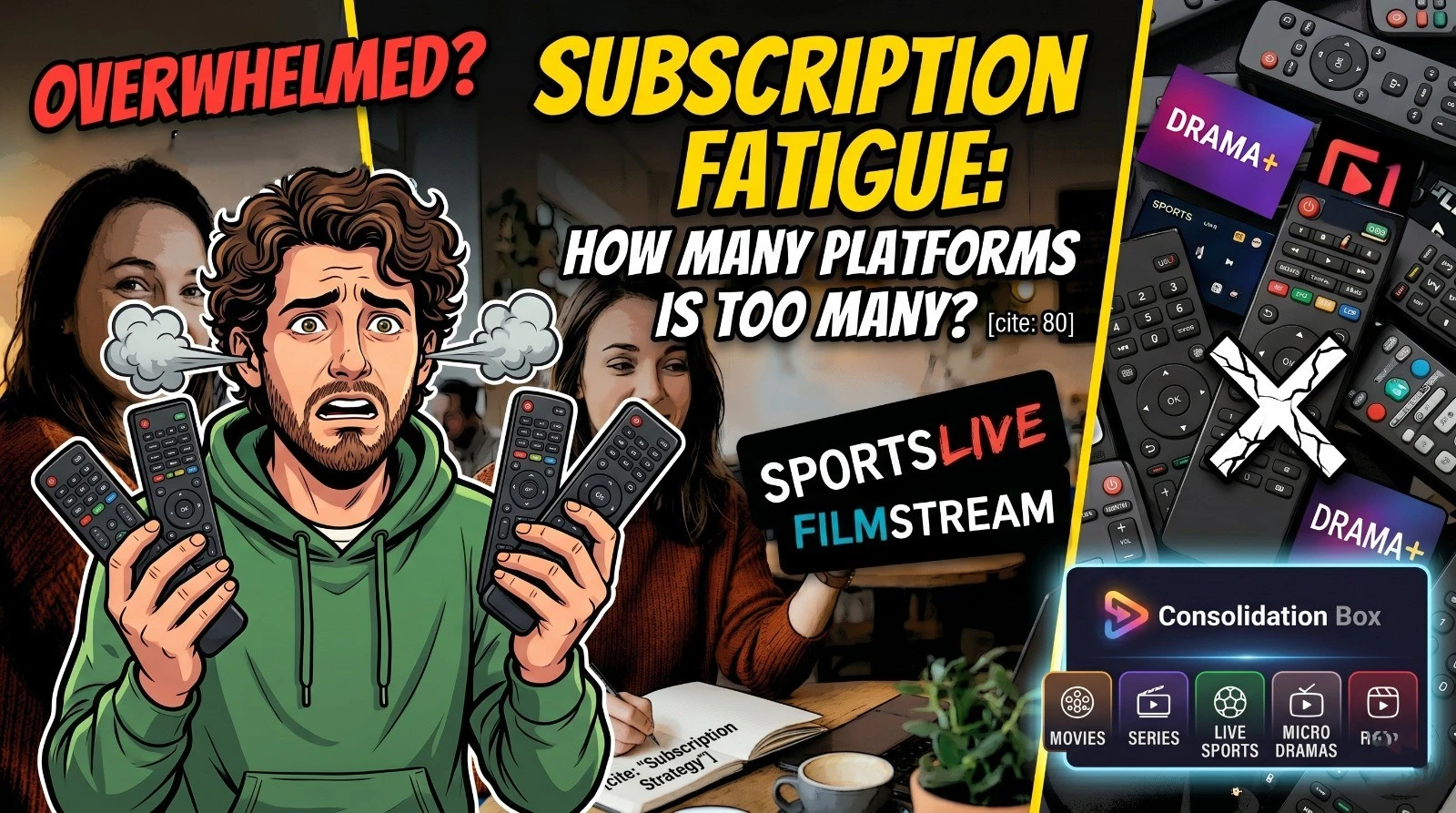
Table of contents
Then the economics changed. Platform after platform raised prices. New services launched, each holding exclusive content viewers felt compelled to access. Today, maintaining three, four, or five simultaneous streaming subscriptions costs many households as much as cable ever did. The aggregator model, exemplified by platforms like StreamPlay, offers the most compelling answer to this growing affordability challenge.
Why This Matters
Streaming subscription costs affect millions of households worldwide. Understanding the factors driving cost creep matters for viewers, content platforms, and every software development company in the USA building media or fintech applications. This is not a niche problem — it is reshaping how entire industries approach entertainment delivery and pricing strategy.
Key Drivers of Subscription Cost Concern:
• Exclusive content strategy forces viewers to maintain more services than desired
• Ad-supported tiers have reintroduced advertising to a medium built on its absence
• Premium add-ons for sports and film releases inflate true per-platform costs
• Subscription management itself creates hidden cognitive and financial burden
The Price Creep: How Streaming Costs Escalated
From Growth Phase to Profitability Pressure
As profitability pressure mounted, platform pricing shifted fundamentally. Top software development companies in the USA building subscription billing infrastructure observed this transition directly. Custom software development companies creating fintech app development services for media platforms noted increasing complexity in pricing models as platforms layered tiers, add-ons, and promotional windows into billing architectures.
Key Points:
• Ad-supported tiers reintroduce advertising interruptions to premium content viewing
• Fintech application development now handles complex multi-tier streaming billing
• Financial app development companies build churn prediction tools for streaming clients
Example / Use Case:
A fintech app development company building subscription management tools for a major media client found that household streaming spend had grown by over sixty percent across three years. Custom software development services in the USA now routinely build spend-tracking features into personal finance apps specifically because streaming subscription costs have become a meaningful household budget line item.
The Hidden Costs Beyond the Subscription Fee
Churn, Rotation, and Cognitive Burden
Premium add-ons represent another significant hidden cost layer. Many platforms now offer base subscriptions that exclude live sports, premium film releases, or specific content bundles. Viewers wanting comprehensive access pay far more than the advertised base price. This complexity mirrors what logistics software development companies encounter when building tiered service pricing — the more layers added, the harder true cost becomes to communicate clearly.
Key Points:
• Premium sports and film add-ons inflate true per-platform cost significantly
• AI and automation in marketing now targets re-subscription moments precisely
• SaaS development companies model churn patterns to optimise retention investment
Example / Use Case:
An MVP development company in the USA prototyping a household subscription tracker found that users consistently underestimated their streaming spend by thirty to forty percent. The hidden costs of premium tiers and rotation friction accounted for most of the gap. This insight now drives feature development in personal finance and ecommerce app development, where subscription cost visibility is a primary user need.
Viewer Responses: Churn, Rotation, and Rationalisation
How Audiences Are Adapting
Ad-supported tier adoption has grown faster than most platforms anticipated, suggesting a significant portion of viewers consider advertising an acceptable trade-off for lower prices. Web application development companies and mobile software development companies building streaming interfaces report that ad tier UI now receives comparable investment to premium interfaces, reflecting this demand reality.
Key Points:
• Ad tier adoption signals that many viewers prioritise price over ad-free experience
• Android app development USA teams optimise ad-supported player experiences heavily
• iOS app development company USA teams report growing ad tier feature requests
The Aggregator Argument: One Subscription, Everything
Why Aggregation Solves the Affordability Problem
This model mirrors principles that the best software development company in the USA applies to enterprise platform consolidation. Custom software development in the USA increasingly favours unified platforms over point solutions, because fragmentation always creates hidden costs that outweigh perceived flexibility benefits. The same logic applies directly to OTT subscription portfolios.
Key Points:
• Unified recommendation engine builds richer viewer preference understanding
• AI and automation service capabilities improve personalisation across content types
• Software development companies in America recognise consolidation value in enterprise too
Technology Enabling the Aggregator Model
AI email automation, AI test automation, and AI software testing tools built by custom software development services in the USA all play roles in keeping aggregator platforms reliable and personalised. The StreamPlay platform demonstrates how these technical capabilities combine to create a genuinely unified entertainment experience at one accessible price point.
StreamPlay as the Aggregator Answer
One Platform for Every Viewing Occasion
The platform's unified discovery architecture amplifies this value further. A recommendation engine that sees viewer engagement across sports, film, and short-form content builds a far richer preference understanding than any single-category platform achieves. Software companies in California USA and custom software development companies globally recognise this unified data advantage as the defining competitive strength of the aggregator model.
Eliminating Hidden Costs and Complexity
StreamPlay eliminates the hidden costs defining the fragmented OTT landscape. One billing relationship, one interface, one recommendation engine. The cognitive overhead of managing multiple streaming subscriptions disappears entirely. Explore subscription plans and discover how one straightforward subscription replaces the complexity of managing multiple platforms simultaneously.
Key Benefits of the Aggregator Model
• Unified interface eliminates relearning navigation patterns across separate apps
• One recommendation engine builds complete viewer preference understanding
• No subscription rotation management or churn cognitive overhead required
• Comprehensive content coverage across movies, series, sports, and short-form
• AI-powered personalisation improves across all content categories simultaneously
Common Mistakes Viewers Make with Streaming Costs
• Ignoring premium add-on costs when evaluating advertised subscription prices
• Treating subscription rotation as free when cognitive management has genuine cost
• Assuming individual platforms will eventually offer everything without aggregation
• Overlooking unified platforms that already solve the fragmentation problem today
The Future of OTT Pricing and Aggregation
Artificial intelligence warehouse capabilities and AI and automation in HR analytics will make aggregator recommendation engines increasingly powerful. Custom software development services in the USA and software development company in Canada are already building next-generation aggregator infrastructure. E-commerce software development services principles — unified checkout, consolidated loyalty, personalised recommendations — are converging with OTT platform design rapidly.
Conclusion
The aggregator model is the most coherent and practical response. StreamPlay restores the original streaming value proposition — one place, one price, everything you want to watch. In an industry that has drifted from that ideal, the aggregator is not just a business model. It is the answer viewers have needed for years.
Planning to launch or modernize an OTT platform?
StreamPlay helps media companies, sports leagues, and broadcasters launch branded OTT aggregator apps with CMS, monetization, discovery, and multi-device support.
Frequently Asked Questions
Why have OTT subscription costs increased so significantly?
Platforms that priced aggressively during growth phases have shifted to profitability-focused pricing. Exclusive content strategies force viewers to maintain more subscriptions simultaneously. Premium sports add-ons and tiered pricing further increase the true cost beyond advertised base prices.
How does the aggregator model reduce streaming costs?
An aggregator like StreamPlay replaces multiple individual subscriptions with one unified platform covering movies, series, sports, and short-form content. One subscription price eliminates the cumulative cost of maintaining separate accounts across multiple disconnected platforms.
What hidden costs come with managing multiple subscriptions?
Beyond headline prices, hidden costs include premium add-ons for sports and films, cognitive overhead from rotation management, and inconsistent billing cycles. Financial app development companies now build subscription tracking tools specifically because these hidden costs have become a significant household budget concern.
How does AI improve the aggregator viewing experience?
Marketing automation artificial intelligence and AI and automation in marketing enable aggregators to build unified recommendation engines. Seeing viewer engagement across all content types simultaneously, AI delivers personalised recommendations that single-category platforms cannot match with their limited data view.