

Table of contents
State of OTT Streaming 2026
The OTT market in 2026 has moved beyond simply putting television shows online. Now streaming services must juggle ways to show content at the same time. They have to offer subscriptions, advertising, FAST channels, live shows connected with TVs, produce short form pieces and deal with audiences that split their attention more and more. New data tells us the market still grows. The way it grows is shifting. More people are watching streams, more homes have connected TVs and operators now face options for how to share and earn money from content.
Quick Answer
OTT streaming in 2026 is witnessing a shift in viewership, as consumers embrace connected TV, advertising supported platforms, FAST channels, sports, and alternative content formats in addition to subscription TV. According to the article, 48.6% of U.S. TV consumption was represented by streaming services in May 2026, while connected TV viewership reached 206.9 million in India. Paid OTT subscriptions and ad supported viewing, as well as alternative distribution models, are also playing a significant role in the current market. For OTT providers, the focus on improving the audience discovery, retention, monetization, and multi device playback is strategically chosen. Overall, the effective OTT strategy emphasizes the importance of audience insight, content fit, business models, and operational efficiency.
Streaming Has Become a Mainstream TV Environment
One of the clearest indicators of the market's scale is television usage itself.
Nielsen's May 2026 Gauge measurement reported that streaming accounted for 48.6% of TV usage during the month. That figure covers streaming as a whole rather than one particular OTT service, but it shows how deeply internet delivered video has moved into everyday television consumption.
For an OTT platform, this creates a different operating challenge than simply attracting an initial audience.
Viewers can move between several services during the same week. A platform therefore needs to make its content easy to discover and give people reasons to return.
Global Subscription Growth Is Maturing
Subscriptions remain the backbone of streaming.
Omdia said that there were 2.24 billion video subscriptions around the world by the end of 2025 up from 1.9 billion in 2024. Omdia also predicts that worldwide subscription growth will slow in 2026.
I see that for operators this is a practical matter.
When a market expands fast the focus often falls on gaining subscriptions. Once the growth slows it becomes harder to keep subscriptions to make people watch more to improve how content performs and to raise revenue per subscription.
A subscriber who stays for one month is not as valuable as a subscriber who stays for a year.
Connected TV Is Changing the Viewing Mix
Connected TV is becoming a part of the OTT world in markets where big screen streaming is growing.
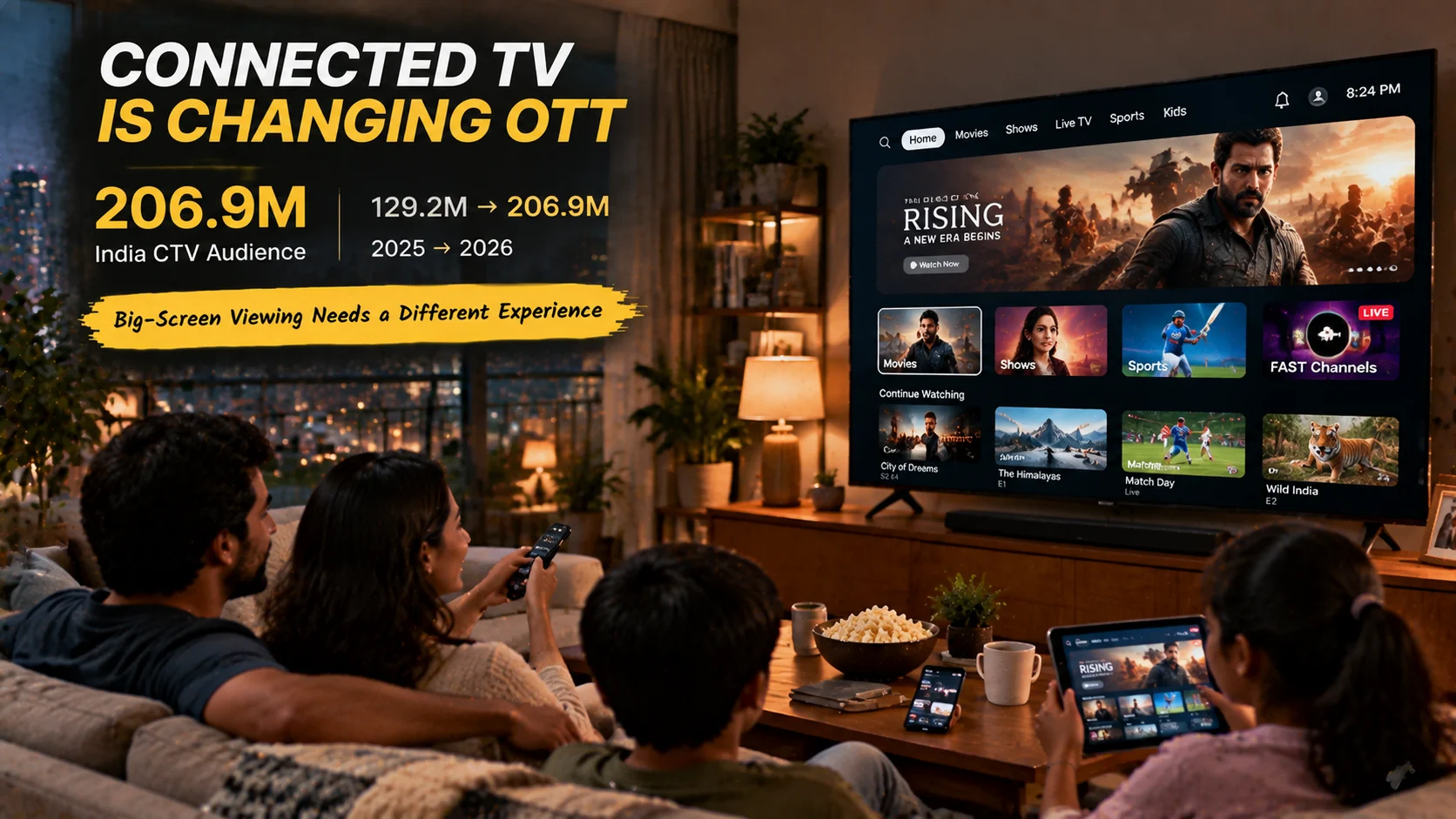
The 2026 Ormax OTT Audience Report says that India’s Connected TV audience is 206.9 million, up from 129.2 million in 2025. That is a 60 percent jump in one year. The same report says that India’s OTT audience will be about 664.9 million people in 2026.
We see that this change is important because the way people watch on a TV is different from how they watch on a phone. Connected TV shows that the experience on a screen is unique.
We notice that people who use a screen may spend time watching movies, shows, sports, FAST channels and other relaxed formats. Navigation, user interfaces, for the remote, content images, smooth playback and finding content all become important for a TV experience.
We cannot just think that the first experience will work perfectly on a television screen. Connected TV demands planning.
Paid OTT Usage Is Still Expanding
The Indian market provides another useful example of how OTT is developing.
Ormax estimated 172.6 million active paid OTT subscriptions in India in 2026, including subscriptions obtained through telecom bundles and OTT aggregators. That represented 16% growth from 148.2 million in 2025.
This is particularly relevant to the broader question of how an OTT platform grows.
Direct subscriptions are only one route. Bundles, aggregators, advertising supported access, and other distribution arrangements can all influence how viewers reach a service.
The commercial model needs to match the audience rather than being treated as a fixed part of the technology.
FAST Is Finding Its Place in the Market
FAST channels are another part of the 2026 OTT picture.
Ormax estimated India's FAST audience at 35.2 million in 2026. The report treats FAST consumption as part of the broader digital video environment rather than as a replacement for subscription streaming.
The appeal is straightforward. Viewers can enter a scheduled channel and start watching without selecting an individual title first, while advertising supports the service.
For a content owner with a sizable catalogue, that creates another way to package older or thematic programming.
The operational workflow is different from standard VOD. Scheduling, metadata, rights, advertising, replacement content, and playback all need to work together.
Content Formats Are Becoming More Diverse
The 2026 Ormax report also points to growth in several content formats.
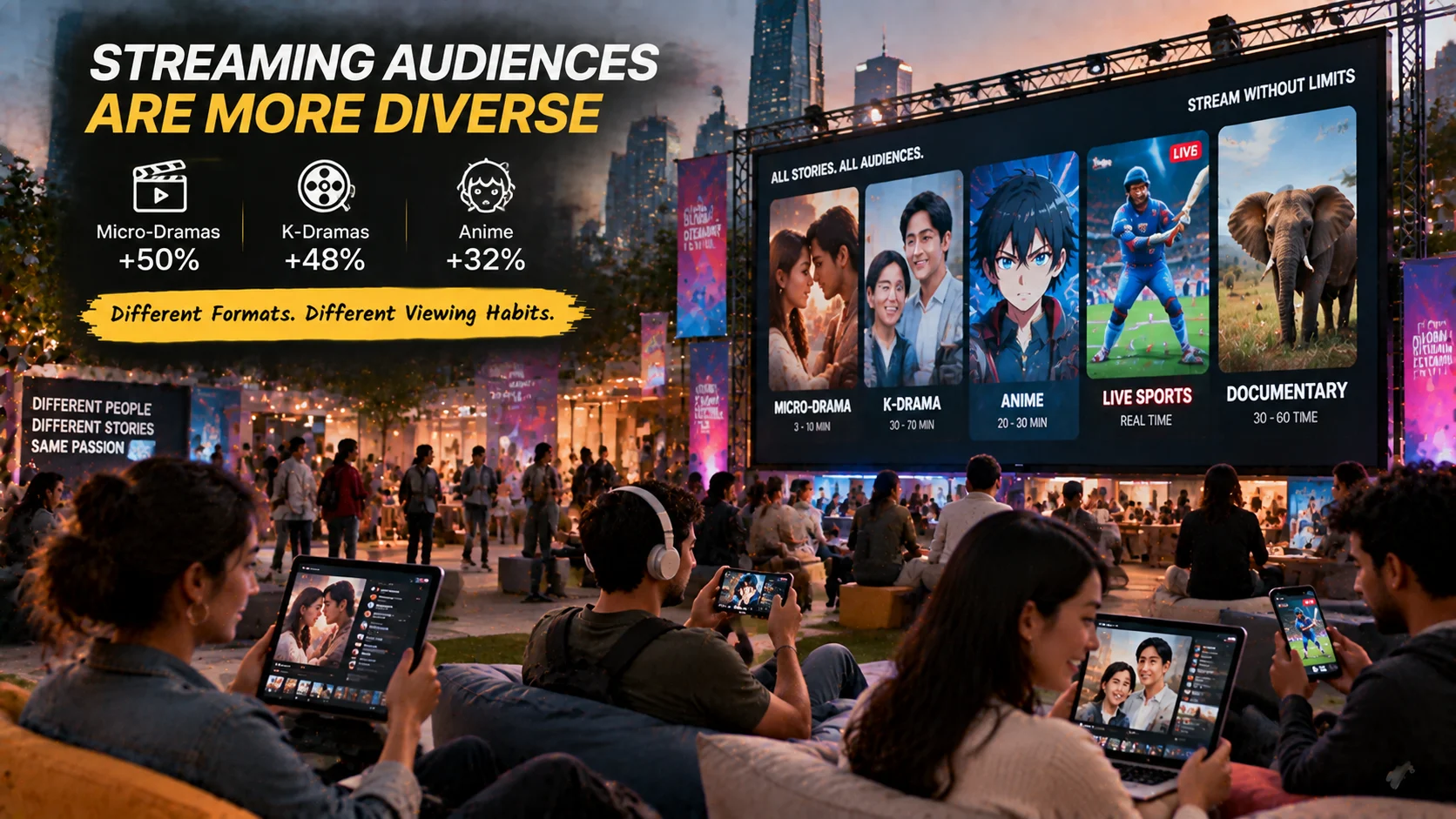
Microdramas, K dramas, and anime recorded audience growth of 50%, 48%, and 32% respectively in its India measurement.
That does not mean every OTT service needs to add these formats.
It does show that streaming audiences are not consuming one uniform type of content.
Different formats can attract different viewing patterns, languages, age groups, and session lengths.
For an operator, the useful question is what those formats mean for its own catalogue and audience.
Monetization Is Becoming More Flexible
From my point of view the subscription‐only approach is no longer the way streaming businesses can earn money. Subscription models are now one piece of a bigger picture.
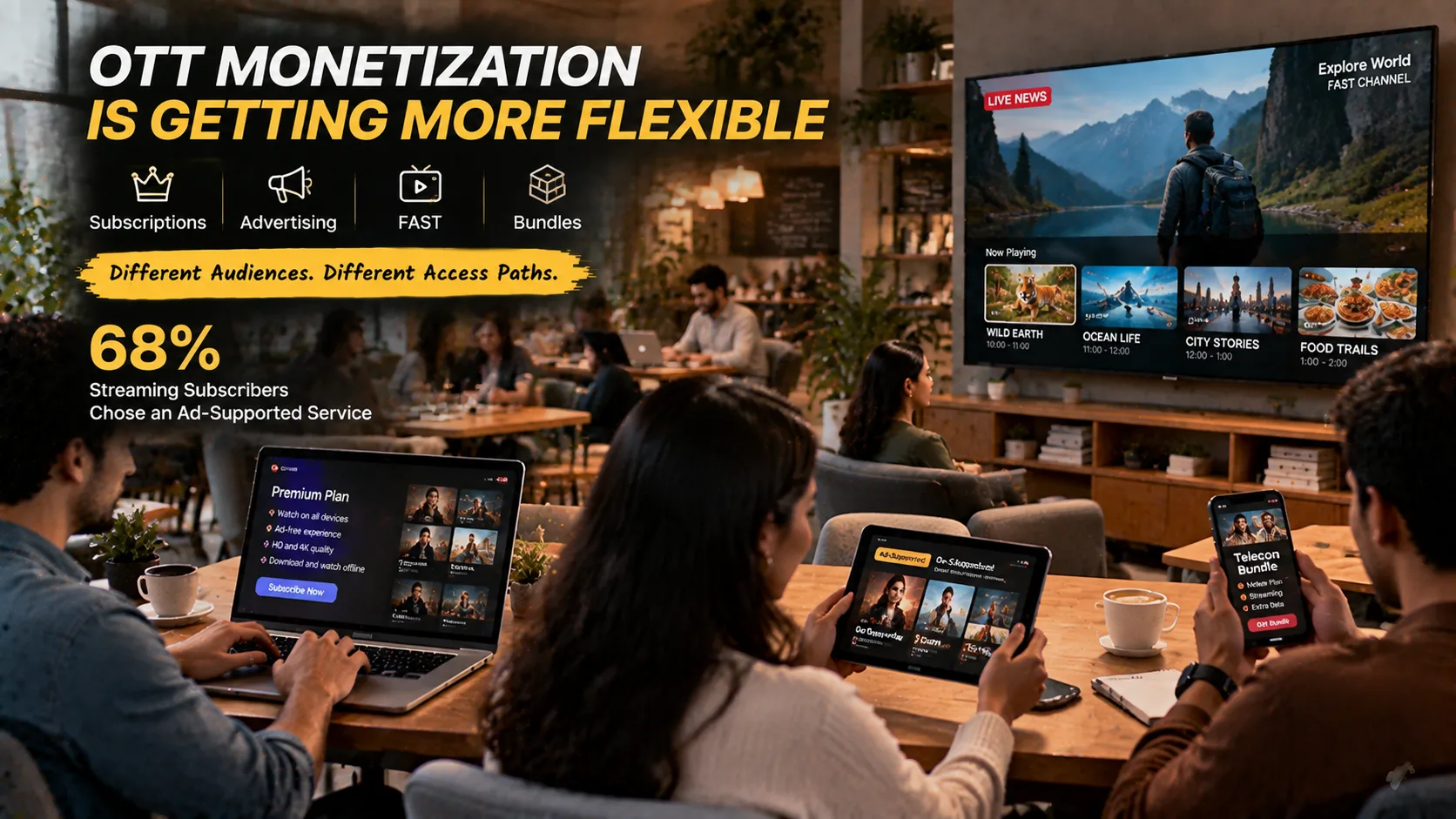
Deloitte’s 2026 Digital Media Trends research shows that 68 percent of streaming subscribers chose an ad‐supported service compared with 46 percent in 2024. The same research finds that 68 percent of SVOD households have at least one ad supported tier. This opens space for mixes of subscription and advertising. A platform might lock premium content behind a paid subscription tier while putting advertising in front of selected catalogue items. Another service could offer an ad supported plan so viewers have an alternative of cancelling. The key point is that how money is earned changes the day to day work. Rules, for access, advertising, how content is arranged, analytics and playback all must fit the chosen subscription model.
Live Content Still Requires a Different Workflow
Live sports and events stay separate from video on demand.
A viewer who comes to watch a match already knows what they want. When they want it.
The sports event must be easy to find. Access must work correctly. Playback must stay reliable while the sports event is happening.
Nielsen said that sports made up thirty percent of ad supported TV viewing by adults aged 25–54, in Q4 2025.
For operators building around live programming, live sports streaming capabilities can be evaluated separately from the workflows used for a conventional VOD catalogue.
What Should OTT Operators Focus On in 2026?
The industry data points toward a few practical areas :
- Audience behavior: Know what people watch, when they watch it, and which devices they use.
- Content organization: A large catalogue is only useful when viewers can find relevant content quickly.
- Monetization: Subscriptions, advertising, bundles, transactions, and FAST can serve different parts of the audience.
- Connected TV: Large screen viewing needs to be treated as a specific product experience.
- Operational workflows: Content processing, metadata, rights, access rules, playback, analytics, and device support need to work together.
When evaluating StreamPlay platform features, those are the kinds of workflows worth examining rather than looking only at a feature checklist.
What the State of OTT Means for the Rest of 2026
The streaming industry grows every day. The streaming industry finds it harder to keep up with changes in the market. More and more people watch videos online each day. Smart TVs are now in every home. Paid subscriptions keep increasing in areas. FAST channels are starting to attract viewers. Ads have become a part of watching on streaming platforms. The streaming industry gives people choices. The streaming industry lets people switch between services quickly.
That means the next step for OTT is not about having an app.
The true challenge is building a service where content, technology, access, money making and the watching experience all fit together perfectly.
Final Thoughts
The state of OTT streaming, in 2026 can be best understood as a market that moves from expansion toward more mature operations. Audience growth still matters. Operators must also understand retention, device behavior, content discovery, monetization and the practical work required to keep a streaming service running. The strongest OTT strategy will depend on the type of content the target audience, the rights, the commercial model and the distribution goals. Technology should support those decisions rather than dictate them.
For official company updates and OTT platform insights, follow StreamPlay on LinkedIn.
Planning to launch or modernize an OTT platform?
StreamPlay helps media companies, sports leagues, and broadcasters launch branded OTT aggregator apps with CMS, monetization, discovery, and multi-device support.
Frequently Asked Questions
What is the state of OTT streaming in 2026?
OTT streaming continues to expand, while the market becomes more fragmented across subscriptions, advertising, FAST, live programming, connected TV, and different content formats.
How large is the OTT audience in 2026?
Ormax estimated India's OTT audience at 664.9 million people in 2026. This is an India specific measurement and should not be treated as a global OTT audience figure.
How important is connected TV to OTT?
Connected TV is becoming increasingly important. Ormax estimated India's CTV audience at 206.9 million in 2026, up 60% from 2025.
Are paid OTT subscriptions still growing?
Yes. Ormax estimated 172.6 million active paid OTT subscriptions in India in 2026, including subscriptions through telecom bundles and OTT aggregators.
Is FAST part of the OTT market in 2026?
Yes. FAST is part of the wider ad supported streaming environment. Ormax estimated an Indian FAST audience of 35.2 million in 2026.
Are ad supported streaming plans becoming more common?
Yes. Deloitte's 2026 research found that 68% of streaming subscribers chose an ad supported service.
What should an OTT operator focus on in 2026?
Operators should examine audience behavior, content discovery, device usage, monetization, rights, access rules, playback, analytics, and the operational workflow required to manage the service.