OTT vs Traditional TV 2026 : Market Comparison
Compare OTT and traditional TV in 2026 across distribution, viewing behavior, devices, monetization, content, and operational requirements.


Table of contents
Market Comparison
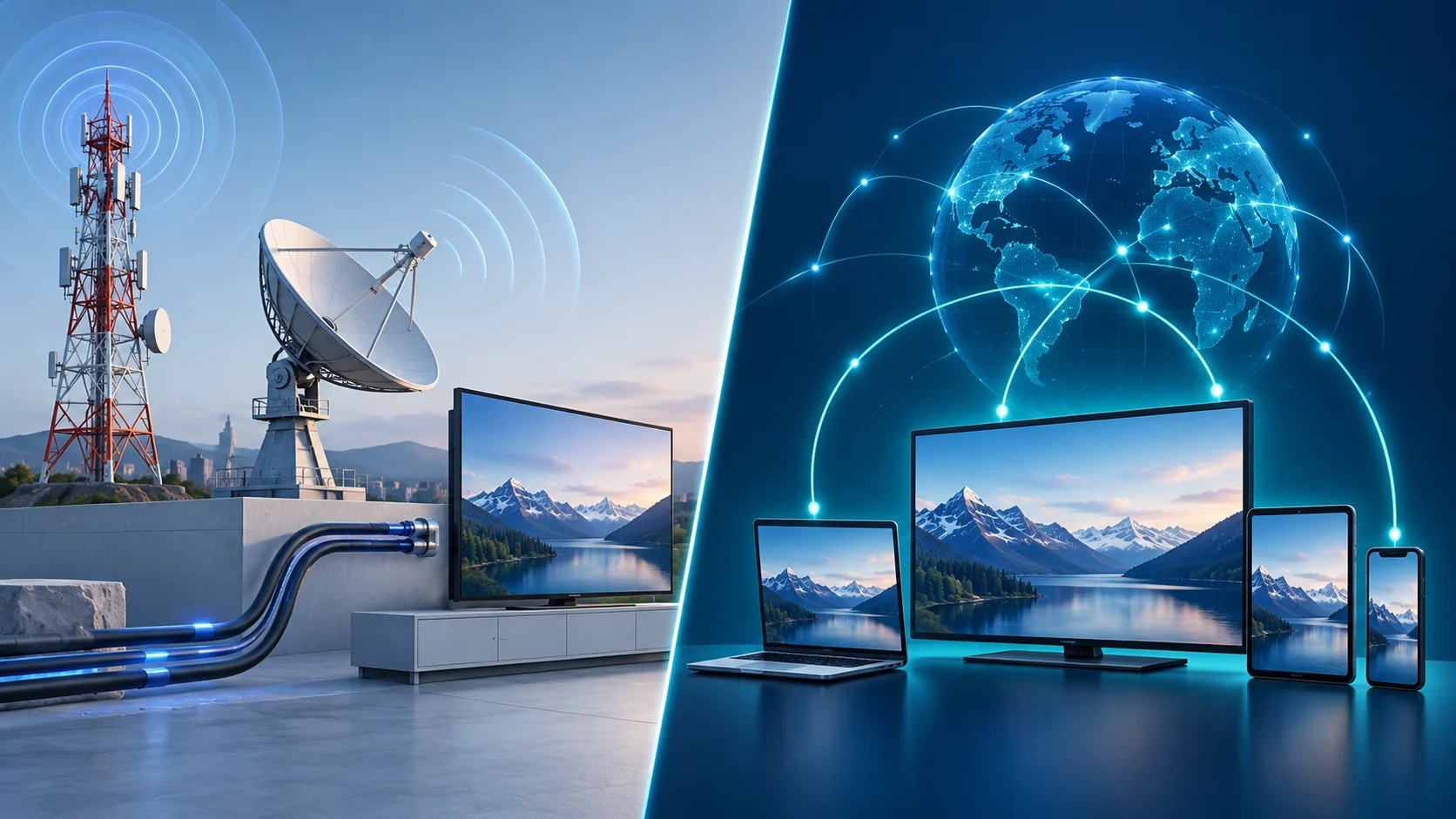
For people who watch TV the difference between OTT and traditional TV can seem easy to understand: one comes through the internet while the other usually comes through a way of sending TV signals to homes.
For the companies that run the services the difference is more complicated.
The two ways of delivering TV have ways of sending the content out different types of devices needed, different ways of arranging the shows and movies, different ways of letting people get the content and different jobs to handle. In 2026 many people will use both ways of just picking one.
So a comparison of the OTT market and the traditional TV market is not about saying which one is better. It is more about learning how each way works.
Quick Answer
One of the main differences between Over The Top (OTT) and traditional television is that the latter has numerous ways of distributing content, namely broadcasting, cable, and satellite platforms. At the same time, OTT refers to distributing digital video content through the Internet to connected TVs, mobile devices, and computers.
OTT services allow their clients to offer viewers both on-demand and live video, find digital content, and monetize their products and services in various ways. However, it might be a good idea to choose either OTT or traditional TV services depending on the content, audience, rights, devices, monetization strategies, and other factors in 2026.
What Is Traditional TV?
Traditional television usually uses ways to send shows to people. These ways include TV signals, cable wires or satellite dishes. People watch shows through a TV network that sends out content. This network usually follows a plan that shows channels at certain times.
The people who run the TV service work around this way of sending out shows. They plan what to show, take care of the channels and people watch what is on at a time. This way of doing things can still have types of shows. These include news, sports, fun shows, movies and special channels. The big difference is that the way TV sends shows is very different from how video works.
What Is OTT?
OTT, or over the top, delivers video content over the internet rather than relying on traditional television distribution.
Viewers can access an OTT service through supported devices such as smartphones, computers, tablets, and connected TVs.
An OTT service can offer movies, episodic series, live events, sports, educational programming, or niche content.
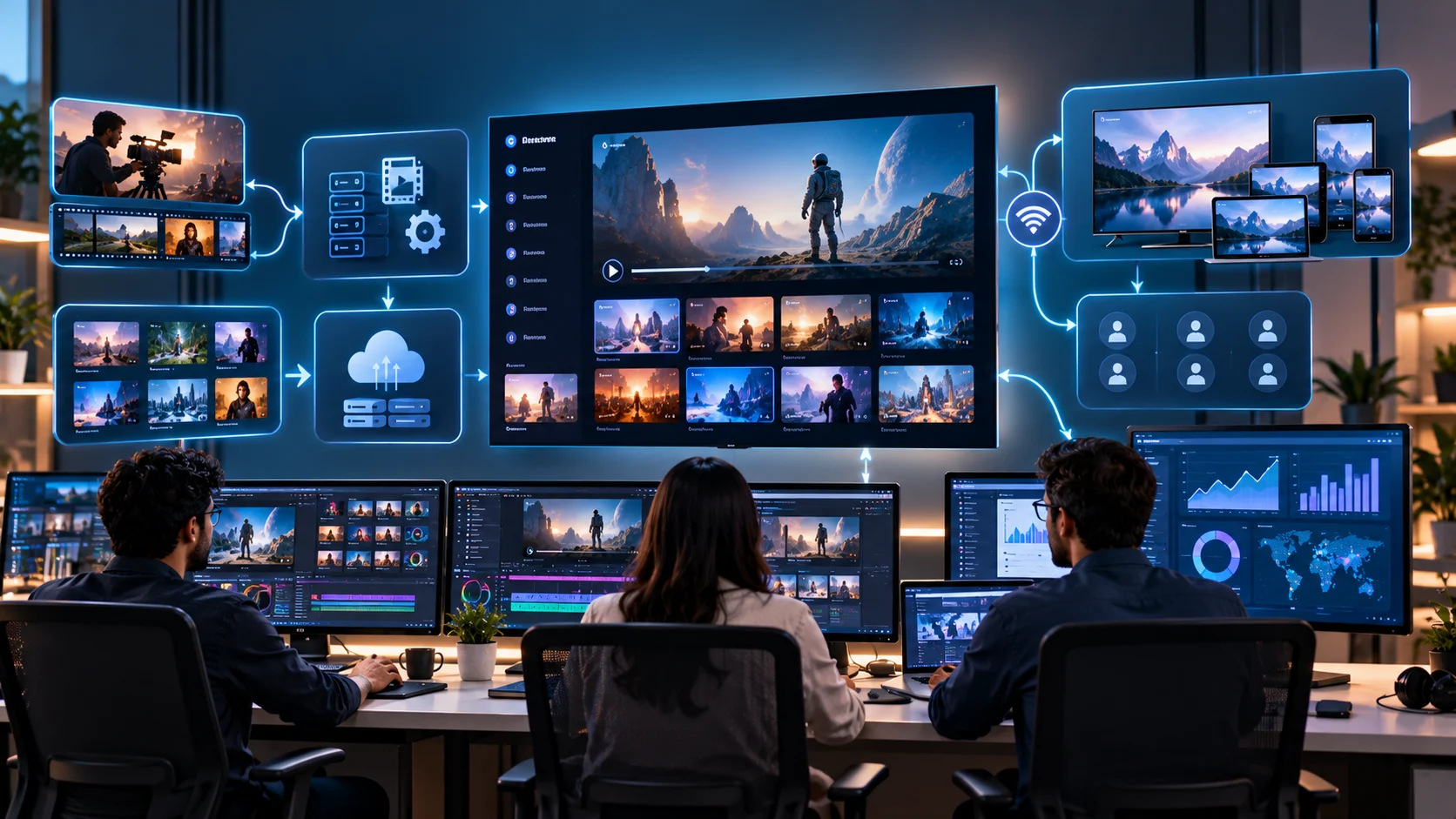
For an OTT platform, the work goes beyond playing a video. Content has to be uploaded and processed, metadata needs to be organized, access rules need to be configured, and the viewer needs a way to discover and watch the content.
The Basic Difference
The clearest distinction is distribution.
| Area | OTT | Traditional TV |
|---|---|---|
| Distribution | Internet | Broadcast, cable, or satellite |
| Viewing | On demand, live, or scheduled | Primarily scheduled channels |
| Devices | Connected TVs, phones, tablets, computers, etc. | Primarily television receivers |
| Content discovery | Search, categories, recommendations, guides | Channel guide and scheduled programming |
| Access control | Accounts, subscriptions, entitlements, or other rules | Often tied to the television distribution package |
| Content updates | Digital publishing workflow | Channel/programming schedule |
| Analytics | Detailed digital viewing data can be collected | Measurement depends on the television environment |
| Monetization | Subscription, advertising, transactions, free access, or combinations | Advertising, subscriptions, carriage and other television models |
The exact setup varies by service, but the table shows why the two models require different operating workflows.
How Viewing Behavior Is Changing
Streaming now takes up a part of how people watch television.
Nielsen's May 2026 Gauge measurement said that streaming made up 48.6% of TV use during that month. This number includes all streaming, not OTT services but it shows how much television is now watched through internet-based services.
People are also using different services instead of just one provider.
Deloitte's 2026 Digital Media Trends study found that 90% of U.S. Households had a paid SVOD service and those who subscribed usually had four services. The same study said that 41% of those households had canceled a SVOD service in the six months.
This creates a way of watching television compared to old style channel TV.
A viewer can switch between streaming services, look for a title pick up where they left off or watch a live event at a scheduled time.
Content Works Differently on Each Model
Traditional television is naturally organized around channels and schedules.
OTT services can follow that schedule based model using live channels or FAST but they can also organize content by individual titles.
A viewer can open an OTT service. Search for a specific movie. They can browse through a genre, pick a series, continue watching from where they left off or join an event.
This gives operators flexibility in how they structure their catalogue.
It also means more work.
For example a six episode series must have episode ordering, accurate titles, proper descriptions, the right artwork, complete metadata, availability dates and access rules.
If any of these details are wrong the viewer experience can still be poor even if the video itself plays without issues.
Live TV and Live OTT Are Not the Same Workflow
Both traditional TV and OTT can deliver live programming.
The difference is how that live content reaches the viewer and what surrounds the stream.
A sports service using OTT may need to manage an event schedule, prepare the live feed, monitor the stream, publish the event, control viewer access, and archive the content afterward.
Traditional television also has substantial live production and distribution requirements, but the viewer side digital workflow is different.
For services where live programming is central, live sports streaming can be evaluated as a specialized OTT use case rather than treating live video as identical to ordinary VOD.
Monetization Looks Different Too
OTT can support several access models.
Common examples include :
- SVOD: recurring subscriptions
- TVOD: payment for individual content or access
- AVOD: advertising supported viewing
- Hybrid: combinations of these approaches
Traditional television relies on advertising and paid access models. Over the top services or
OTT allow operators to link payment directly to content access through accounts and entitlements.
Advertising supported streaming is now a part of the market. According to Deloitte’s 2026 research 68 percent of streaming subscribers chose an ad supported service, a rise from 46 percent in 2024.
The monetization method chosen affects the workflow. An ad supported OTT service demands more operations than a premium subscription service.
Connected TV Brings the Two Worlds Closer
Connected TV is an interesting middle ground.
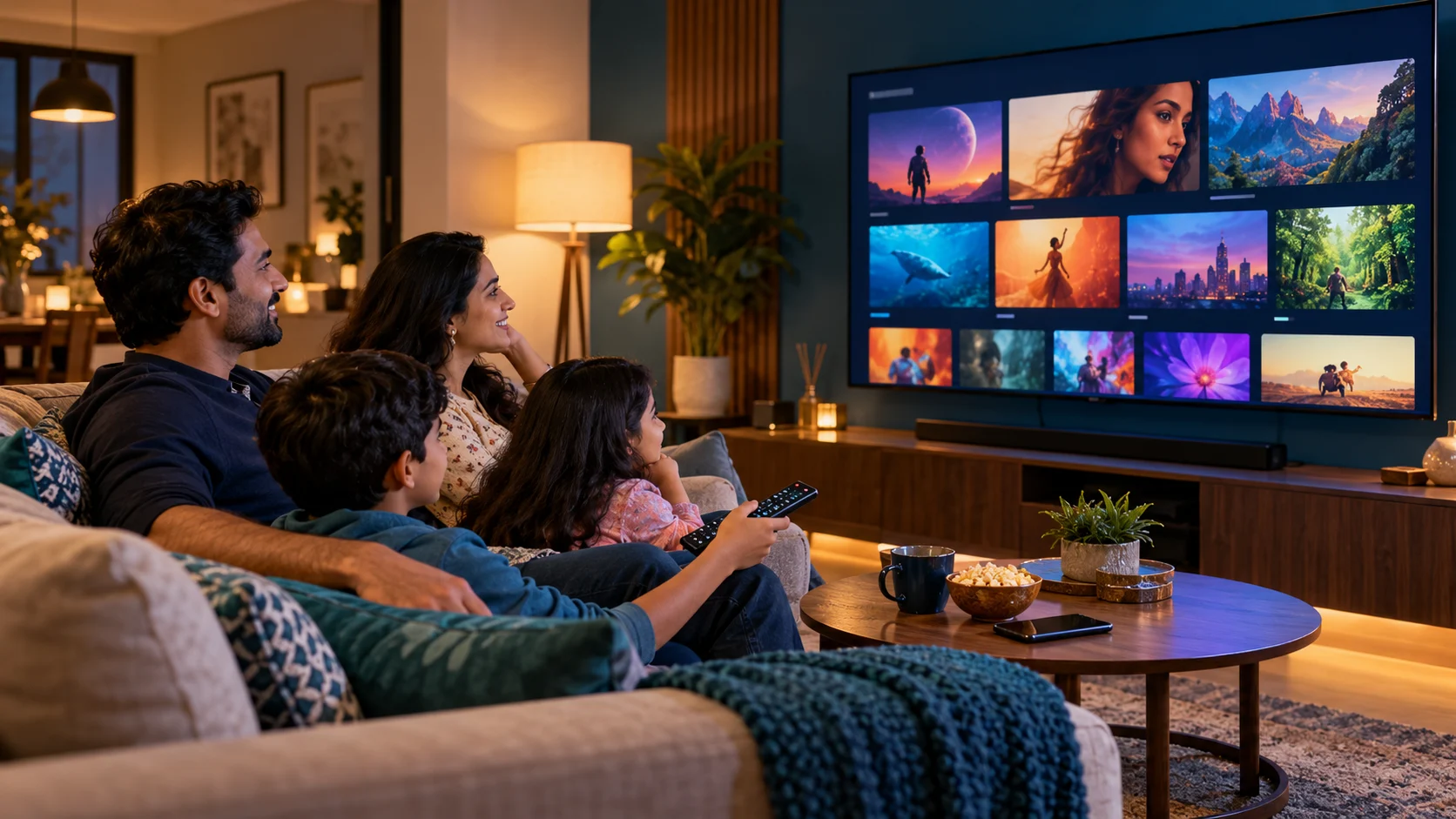
The viewer may still be sitting on the television screen that is used for traditional TV yet the content is arriving through an internet connection.
The 2026 Ormax OTT Audience Report estimated that India’s Connected TV audience is 206.9 million, up from 129.2 million in 2025.
This means that OTT operators must consider the television environment even when their distribution is digital.
Friendly navigation, clear artwork, search, playback and content discovery all matter on a large screen for Connected TV users.
The viewing device may look familiar. The operating model behind it is not.
Which Model Fits Which Use Case?
There is no single distribution model that fits every content business.
| Use case | Considerations |
|---|---|
| Scheduled television channel | Channel programming and broadcast/cable/satellite distribution |
| Large VOD library | Search, metadata, discovery, playback, and access rules |
| Live sports | Event scheduling, live monitoring, access, and playback |
| Premium series | Subscription access, episodes, metadata, and discovery |
| Free ad supported content | Advertising, scheduled or on demand programming, and measurement |
| Niche content service | Audience targeting, specialized catalogue, and direct distribution |
A broadcaster can keep using TV and still start offering an OTT service at the same time.
A sports organization could stream events using OTT platforms while still keeping their regular TV deals.
A content owner who has a collection of old shows might use video on demand and FAST channels along, with their current ways of sharing content.
These approaches don’t have to be one or the other. They can work together.
What Changes for the Operator?
Moving from traditional television distribution to OTT is not simply a technology swap.
The operator has to consider :
- Content processing
- Metadata
- Device compatibility
- User accounts
- Entitlements
- Subscription or payment rules
- Content rights
- Search and discovery
- Playback
- Analytics
- Customer support
- Application management
This is why StreamPlay platform features should be evaluated against the actual workflow a streaming service needs to operate rather than against a generic feature list.
A service built around recorded series will have different requirements from one built around live sports. The content and audience should drive the platform configuration.
OTT vs Traditional TV in 2026: What Is Actually Changing?
The market comparison is not about television versus streaming.
Traditional television still works through ways of getting content to people while OTT has made it possible to send and get content in many more ways.
The bigger change is that people now have control over when, where and how they watch different kinds of video.
They can watch a show that is on a schedule and start a show whenever they want to move between different services using a smart TV or watch on a phone.
This choice gives chances for companies that make content but it also means the people who run these services have more systems to take care of.
Final Thoughts
The OTT vs TV comparison for 2026 goes beyond just the delivery technology.
Traditional TV relies on known methods like broadcast, cable and satellite to get content to viewers. OTT on the other hand uses the internet to deliver content. This gives OTT flexibility in how content is organized, accessed and monetized. It also supports a variety of devices and digital platforms.
For businesses traditional TV might still be a key part of how they reach audiences. For others OTT offers the tools needed to deliver content directly to consumers. In cases companies can and do use both traditional TV and OTT together.
The real choice comes down to what the operator needs. It starts with the content they offer, who their audience's what rights they hold, what devices their users use, how they plan to make money and what kind of workflow they need to run smoothly.
For official company updates and OTT platform insights, follow StreamPlay on LinkedIn.
Planning to launch or modernize an OTT platform?
StreamPlay helps media companies, sports leagues, and broadcasters launch branded OTT aggregator apps with CMS, monetization, discovery, and multi-device support.
Frequently Asked Questions
What is the main difference between OTT and traditional TV?
Traditional TV uses broadcast, cable, or satellite, while OTT delivers content over the internet.
Is OTT replacing TV?
Streaming is growing rapidly, but traditional TV remains popular. Many viewers use both.
Can OTT provide live TV?
Yes, OTT can stream sports, news, events, and scheduled programs live.
Can OTT services offer on demand content?
Yes, OTT platforms let viewers watch movies, series, and videos whenever they want.
How does OTT monetization differ from traditional TV?
OTT uses subscriptions, ads, rentals, purchases, or free access. Traditional TV also relies on advertising and paid plans.
Why is connected TV important for OTT?
Connected TV brings internet-based streaming to the big screen, making apps and content easier to access.