Building an OTT Streaming Business in 2026: Full Guide
Learn how to build an OTT streaming business in 2026, covering platform architecture, development options, monetization, content workflows, and operating costs.


Table of contents
The Complete Guide to Building an OTT Streaming Business in 2026
There are many systems involved in creating an OTT streaming business. These include content management, Video Distribution, Applications, Security & Processes.
To know how to start an OTT streaming business in 2026 you need to know what to build and what services to use.
A successful platform isn’t just an app. It should be a digital solution that can help you manage your content, provide reliable streaming, make money and scale in the future.
Quick Answer
To build an OTT streaming service in 2026 you’ll need a solid content strategy, reliable streaming technology, easy to use apps and monetisation. You can build your own bespoke tech stack, use white label solutions or do a hybrid approach. The key considerations are how you design your platform, manage your content, deliver your videos, keep things secure, manage your costs and scale.
What Makes an OTT Streaming Business Different From a Video App?
A fundamental video system gives a viewer access to video content that has been uploaded. An OTT business must manage a whole ecosystem of content providers, technology and paying consumers.
This is the real difference.
An OTT business typically manages:
- Content operations: Acquisition, metadata, publishing, and licensing restrictions.
- Audience management: User accounts, subscriptions, and viewing permissions.
- Video delivery: Encoding, storage, distribution, and playback.
- Revenue operations: Billing, advertising, and transaction management.
- Business intelligence: Engagement analytics, retention, and content performance.
These systems need to exchange accurate information.
For example, when a subscription expires, billing and access control systems must work together to update the viewer's permissions.
Should You Build Custom OTT Technology or Use an Existing Platform?
One of the earliest development decisions involves choosing between custom engineering and existing infrastructure.
Each approach offers different levels of flexibility, responsibility, and maintenance.
| Development approach | Main advantage | Main consideration |
|---|---|---|
| Custom development | Greater architectural control | Higher engineering responsibility |
| White-label solution | Existing infrastructure and applications | Customization depends on the provider |
| Hybrid development | Combines existing tools with custom features | Integration complexity |
It might be suitable if you have very specific requirements and an in-house engineering team.
You could look at white label OTT solutions to ensure you have an established video environment.
A hybrid solution may be suitable for businesses who want bespoke business processes but existing video processing and delivery.
The correct choice will depend on what you want to have control over within your business.
What Technology Architecture Does an OTT Platform Need?
An OTT platform consists of a number of technical elements.
These will provide an insight into what your vendor will offer and what will be required to develop your platform and maintain it.
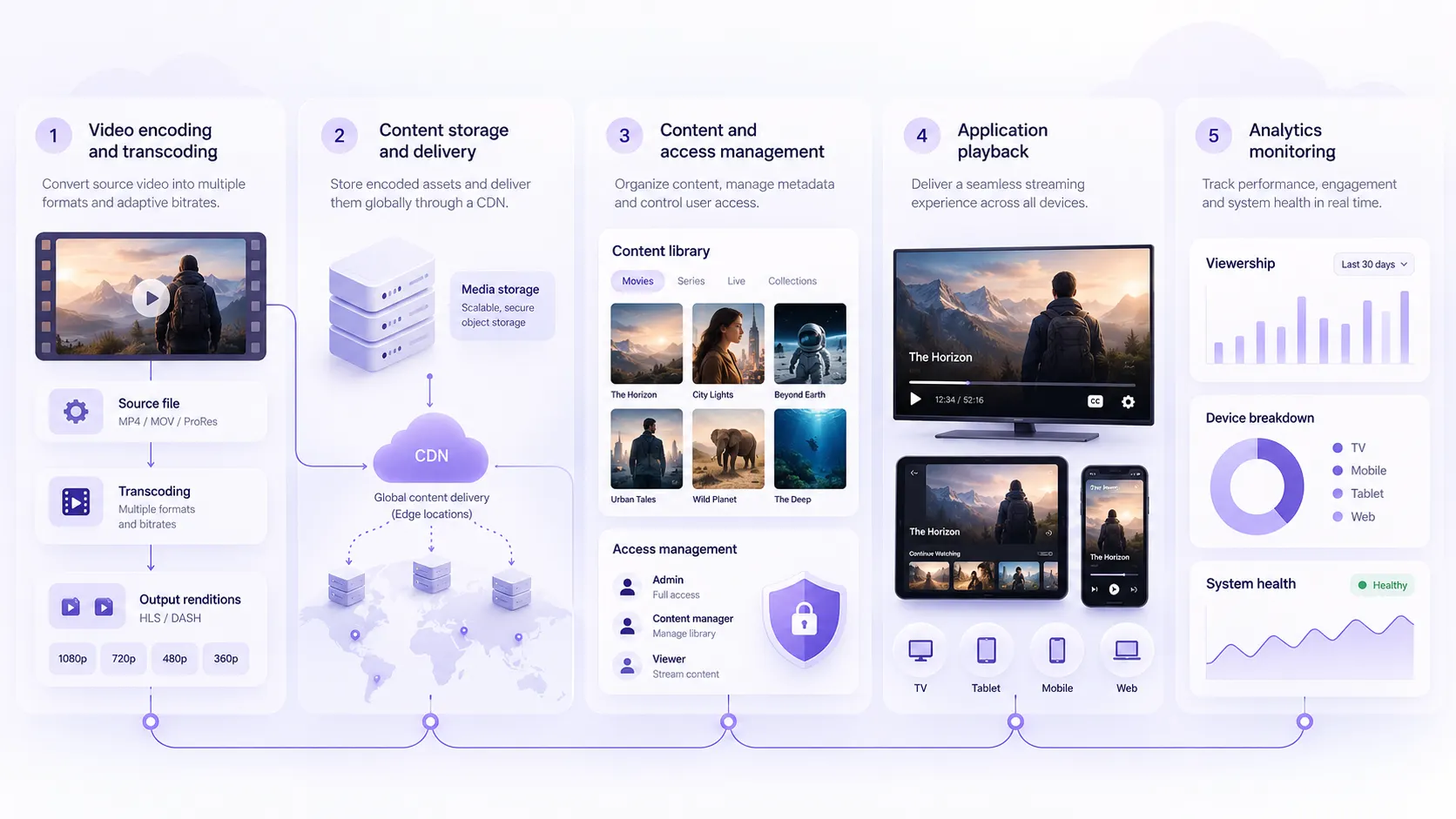
Video Processing/Delivery
Videos will need to be processed so they can be played across various devices.
This will consist of:
- Encoding/Transcoding: Videos will be encoded to the correct format and resolution.
- Adaptive Bitrate Streaming: Playing the correct quality video depending on the available bandwidth.
- Delivery: Content will be delivered closer to the user.
- Streaming: Video is played using the correct formats (HLS/MPEG-DASH).
If the delivery is live then low latency streaming may be required.
Content & Access Management
- Content Management System: Manages all of your movies, episodes, art work, languages and publishing schedule.
- Authentication/Entitlement: Managing who can access specific content.
- Security: DRM (Digital Rights Management) will be included to ensure everything is licensed correctly.
Application & Analytics
The application is used by the end user to ensure everything works together including searching, navigating, playing and managing their account.
Analytics display engagement and technical performance which helps operators identify issues.
How Do You Design the Viewer Experience?
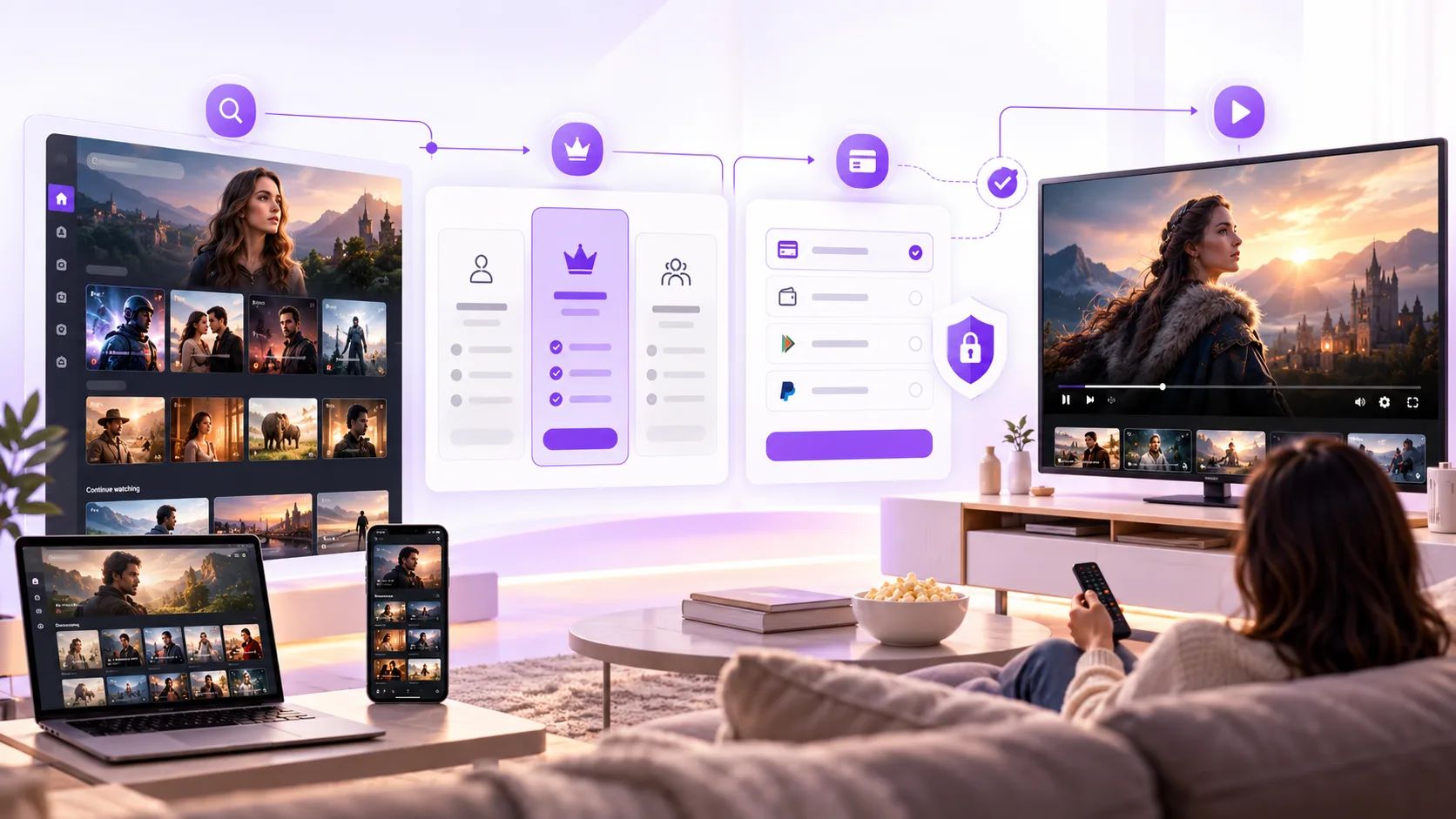
Technical infrastructure matters, but viewers judge the platform through everyday interactions.
A subscriber should be able to register, discover content, start playback, and continue watching without unnecessary steps.
When evaluating OTT platform capabilities, consider how the underlying systems support the complete viewer journey.
Prioritize:
- Simple onboarding: Make registration and subscription selection understandable.
- Effective discovery: Organize content with useful categories, search, and metadata.
- Reliable playback: Minimize interruptions across supported devices.
- Consistent navigation: Maintain familiar controls across mobile, web, and television.
- Clear account management: Make billing information and subscription controls accessible.
Test these interactions as complete workflows rather than isolated features.
How Should Monetization Be Integrated Into Platform Development?
The monetisation model of an OTT service will impact technical decisions.
Subscription Video on Demand requires recurring payments and user account management. Advertising Video on Demand requires advertising serving and analytics. Transactional Video on Demand requires purchase based access.
Hybrid platforms may combine these.
Before development, define:
- Which content requires payment
- How subscriptions renew or expire
- Whether advertisements appear in paid or free content
- How refunds and failed transactions affect access
- Which payment methods are required in target markets
These rules should be tested alongside playback rather than treated as separate commercial features.
How Can You Control OTT Development and Operating Costs?
OTT development includes both initial implementation and continuing operational expenses.
Infrastructure costs can change as content libraries expand and viewers watch more video.
A practical budget should consider:
| Cost category | Primary expense drivers |
|---|---|
| Development | Applications, customization, and integrations |
| Video infrastructure | Storage, encoding, and bandwidth |
| Content operations | Licensing, metadata, and publishing |
| Security | DRM, authentication, and monitoring |
| Ongoing operations | Support, maintenance, and updates |
Estimate costs using realistic viewing assumptions, including average session duration, expected video quality, and concurrent traffic.
Avoid comparing platforms only by their initial setup costs. Long term maintenance and distribution expenses are equally important.
How Can You Manage Content Across Multiple Providers?
Content could be sourced across multiple sources such as studios, individuals and local broadcasters.
This can lead to duplication, inconsistencies and rules.
Using a well managed Video on Demand Content Management System you can easily manage your content, whether that be films, series or aggregated content.
A local entertainment service may contain licensed movies and indie series.
Metadata is required to be consistent for the content, showing who owns it, what languages are available and territories.
Content should be aggregated to make it easy for your audience to view, however there will be licensing rules.
What Should Your OTT Development Roadmap Include?
Ensure your development roadmap is driven by technical requirements.
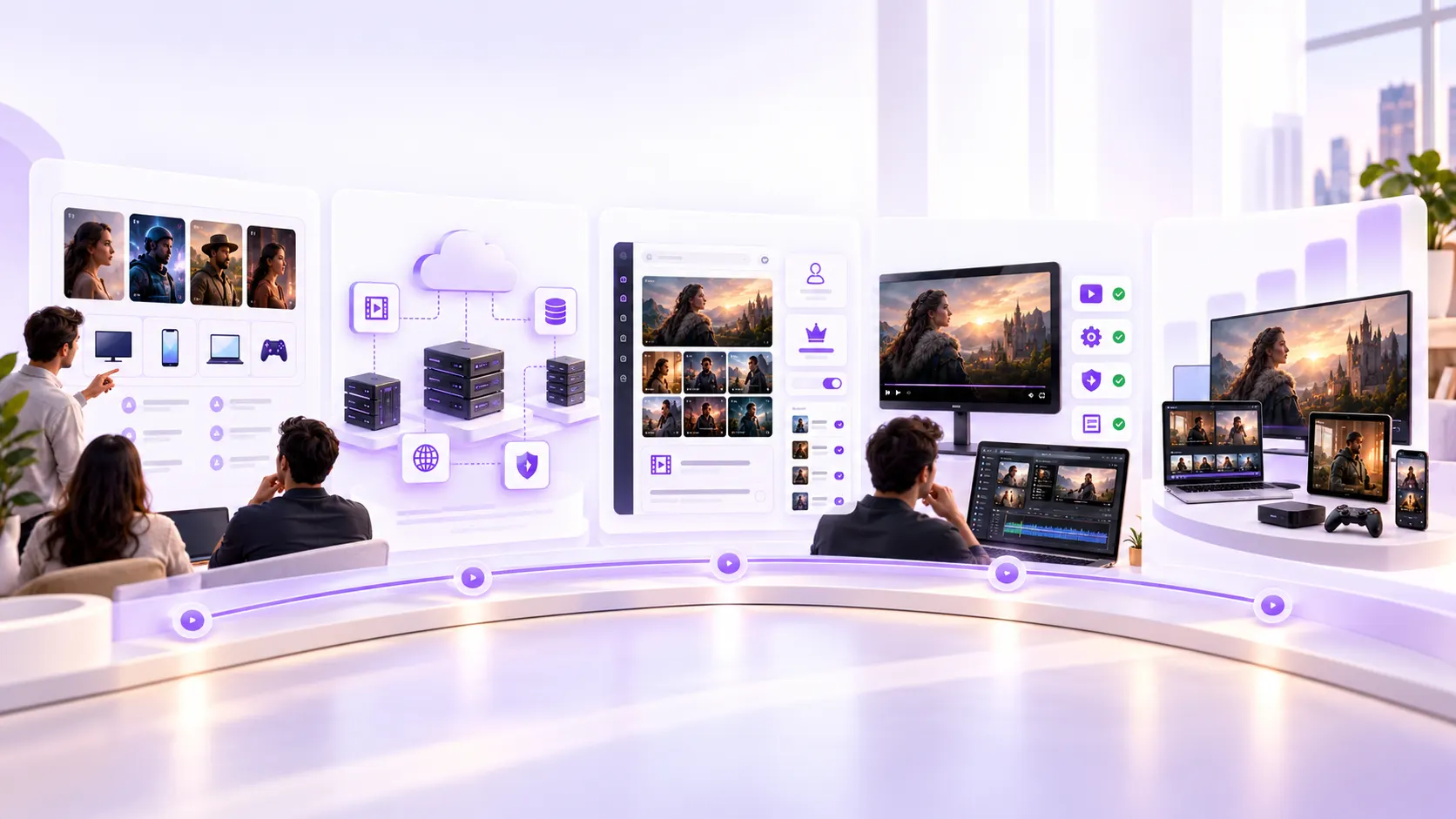
First establish what you need:
- Establish the platform requirements: Who are your audiences? What is your content going to be? Which devices are going to be supported? How are you going to monetise?
- Establish the architecture: Which systems will you build, purchase or integrate?
- Build core workflows: Content management / Authentication / Playback / Monetisation.
- Test the core functions: Are people able to access the content? Is the playback good? Are they secure? Does the application behave well?
- Grow organically: Add extra devices, personalisation and extra features based on real demand.
Define ownership of components and how they will be managed and issues handled.
Final Thoughts
There is much to consider when building an OTT streaming service in 2026.
The key considerations will be surrounding your content, tech, payment, security and operational strategy.
You should focus on getting your core functions working well, making sure all development responsibilities are clear and keeping your costs manageable before moving onto more advanced features.
By planning your architecture well you will have a solid foundation to allow your service to grow as your audience and business needs change.
For more information about OTT technology and streaming business development, explore OTT industry insights on LinkedIn.
Planning to launch or modernize an OTT platform?
StreamPlay helps media companies, sports leagues, and broadcasters launch branded OTT aggregator apps with CMS, monetization, discovery, and multi-device support.
Frequently Asked Questions
What do I need to develop an OTT streaming platform?
Licensed content, streaming infrastructure, applications, monetization, security and operations.
Should I build my own OTT or use a white label solution?
White label provides some infrastructure out of the box, whilst building your own will offer more control. This will depend on your budget and requirements.
What technologies are needed to build an OTT platform?
Most commonly you will require video encoding, CDN, adaptive streaming, DRM, content management and analytics.
How do OTT streaming platforms make money?
They can be subscription based, advertising based, pay per view, or a combination of these.
What factors affect the cost of building an OTT platform?
The complexity of the apps, how many devices you want to support, video delivery, integration, security and maintenance.
Can an OTT platform support multiple content providers?
Yes! You can use content aggregation to pull together multiple content providers licensed content into one place.