
Top 5 Hidden Features on OTT Platforms You Are Probably Not Using
Discover 5 hidden OTT platform features that can improve content discovery, recommendations, subtitle settings, watchlists, and overall streaming experience.

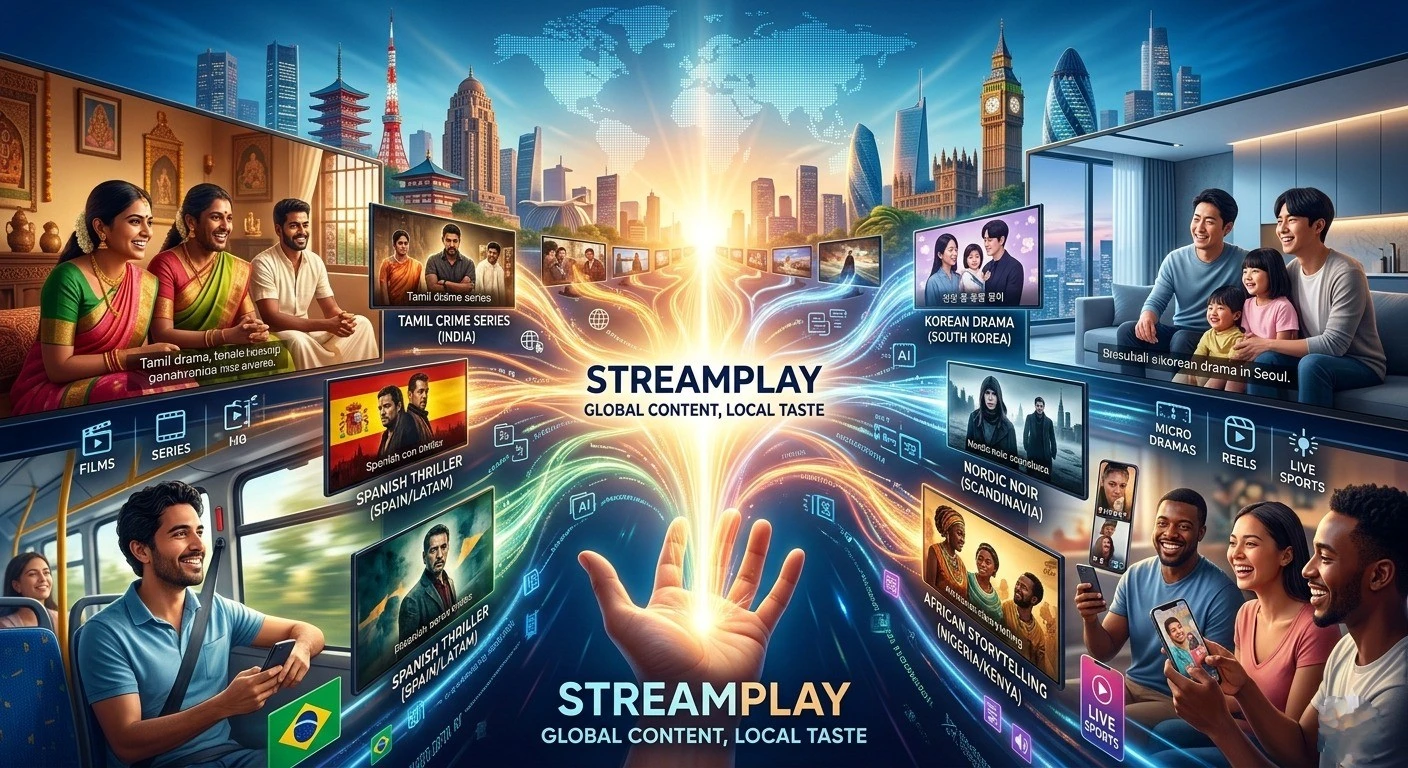
Table of contents
The problem is that most of these features are tucked inside submenus, never prominently promoted, and almost never discovered by the average subscriber without being specifically pointed toward them. Meanwhile, the viewers who do find and use them consistently report a meaningfully better experience — better recommendations, faster discovery, and far less time lost to indecision.
Platforms like StreamPlay pack these tools into a single unified experience covering movies, TV series, live sports, micro-dramas, and reels. The five features below can transform how you interact with all of that content — starting today.
Why This Matters
Why unlocking hidden platform features matters:
Advanced filtering surfaces relevant content that the homepage algorithm never prioritises
Strategic watchlist use actively trains the recommendation engine to serve better suggestions over time
Subtitle and audio customisation removes the single biggest barrier to enjoying international and regional content
Smart download management means commutes and travel never leave a viewer without quality content
Profile optimisation recalibrates the algorithm to reflect actual preferences rather than accidental viewing history
Core Concepts: The Five Features That Change Everything
Feature 1 — Advanced Filtering and Mood-Based Discovery
Most viewers know they can filter by genre. Far fewer explore the additional layers available: release year, language, runtime, audience rating, and content tone. Want a film under ninety minutes from the 1970s, or a series in a specific regional language with a tense rather than uplifting mood? Advanced filters make these searches precise and fast. Some platforms go further with mood-based discovery — curated collections built around emotional states rather than traditional genre categories — cutting through the paradox of choice that endless genre browsing creates.
Key Points
Release year, runtime, and language filters together narrow a large library to a personally relevant shortlist in seconds
Mood-based collections match content to emotional state rather than category, solving decision fatigue more effectively than traditional browsing
Advanced search on StreamPlay works across all content types including micro-dramas and reels, not just long-form titles
Example Use Case
A viewer who wants something specific — a foreign-language thriller under two hours, with high audience ratings, released in the last three years — can find that result in under thirty seconds using advanced filters on StreamPlay. The same search through homepage scrolling could take twenty minutes and still not surface the right title.
Feature 2 — Strategic Watchlist and Collection Management
The hidden value lies in how a well-curated watchlist interacts with the recommendation engine. Adding a micro-drama series, a foreign-language film, or a live sports event tells the algorithm about intent that goes far beyond passive viewing history — actively nudging future recommendations in directions that passive browsing alone would never generate. Some platforms allow multiple lists, enabling viewers to organise saved content by mood, occasion, or viewing companion, making each session feel immediately purposeful.
Key Points
Multiple lists organised by mood or occasion — solo late-night, weekend family viewing, sports catch-up — reduce pre-session decision fatigue significantly
A curated watchlist actively teaches the platform what you want to watch next, not just what you have already seen
Revisiting and pruning the watchlist periodically keeps recommendations sharp and prevents the backlog from becoming overwhelming
Example Use Case
A viewer who adds a selection of international crime series, atmospheric documentaries, and short-form reels to their StreamPlay watchlist will notice measurably improved homepage recommendations within a few days — because the platform is now working from explicit signals of interest rather than inferring preferences from passive watch history alone.
How Subtitle and Audio Customisation Changes the Regional Content Experience
The subtitle barrier is one of the most persistent obstacles to enjoying international and regional content on any platform. Many viewers who would genuinely love Korean thrillers, Spanish crime series, or Tamil films never get past the first episode because the default subtitle presentation feels distracting rather than invisible.
Subtopic: Feature 3 — Full Subtitle and Multi-Audio Control
Multi-audio tracks are equally underused. Many films and series are available in multiple dubbed languages as well as their original audio. Exploring the original audio of a show normally watched in a dubbed version reveals performance nuances that dubbing cannot fully capture, often transforming the viewing experience entirely.
Key Points
Background opacity settings make subtitles readable without dominating the visual field of a scene
Original audio consistently preserves performance quality that dubbing loses, particularly in emotionally complex dramatic scenes
Multi-audio availability on StreamPlay's series and movies makes regional content accessible across a wide range of viewer preferences
Example Use Case
A viewer who previously abandoned a critically acclaimed Korean drama because the default subtitles felt distracting adjusts the font weight and background opacity in StreamPlay's settings and returns to the same series. Within one episode, the subtitles become effectively invisible — and the show that felt inaccessible becomes one of their most memorable viewing experiences of the year.
Key Benefits of Using Hidden OTT Platform Features
Advanced filtering surfaces relevant content in seconds rather than minutes of aimless scrolling
Strategic watchlist management produces progressively better recommendations that compound in quality over time
Subtitle customisation opens the full breadth of international and regional storytelling to viewers who previously found subtitles off-putting
Offline download management ensures consistent access to quality content regardless of network conditions or travel schedule
Profile optimisation recalibrates the algorithm to reflect genuine taste rather than accidental or family-shared viewing history
Combining these tools on a platform like StreamPlay — with movies, series, sports, micro-dramas, and reels — transforms every session from passive consumption into active, curated entertainment
Common Mistakes Viewers Make With Platform Features
Treating the watchlist as a passive archive rather than an active recommendation training tool
Never adjusting subtitle appearance, then concluding international content is not enjoyable when the real barrier was presentation
Downloading content only reactively before flights rather than maintaining an organised offline library for daily commutes
Keeping accidental viewing history — family members' sessions, content watched under very different circumstances — without clearing it from the recommendation profile
Using a single profile for multiple viewers with different tastes, producing recommendations that serve no one consistently
Never rating watched content explicitly, leaving the recommendation algorithm to infer preferences from incomplete passive signals
Ignoring notification settings for live sports events and new season releases, missing content they would have prioritised if alerted
Future Trends in OTT Platform Features and Personalisation
Offline viewing will evolve toward predictive downloading, where the platform pre-loads content it anticipates a viewer will want before the viewer has made that decision consciously. Interactive watchlist tools will develop social dimensions, allowing viewers to share curated lists with friends and build collaborative viewing queues for co-watching sessions. Platforms like StreamPlay that invest in feature depth alongside content breadth will be the ones that retain viewers not just because of what is in the library, but because of how intelligently the platform helps each viewer navigate it.
Conclusion
The tools are already there. Explore everything StreamPlay has to offer — and discover that the best streaming experience you have ever had might be just a few settings changes away.
Planning to launch or modernize an OTT platform?
StreamPlay helps media companies, sports leagues, and broadcasters launch branded OTT aggregator apps with CMS, monetization, discovery, and multi-device support.
Frequently Asked Questions
What hidden features on OTT platforms make the biggest difference to the viewing experience?
Advanced content filtering, strategic watchlist management, and profile optimisation consistently produce the most noticeable improvements for viewers who adopt them. Advanced filtering surfaces relevant titles in seconds. A well-curated watchlist actively improves recommendation quality over time. Profile management — including viewing history control and explicit content ratings — recalibrates the algorithm to reflect genuine taste rather than accidental viewing patterns.
How does a watchlist actually improve content recommendations?
Most recommendation algorithms treat watchlist additions as explicit intent signals — stronger indicators of preference than passive browsing or accidental viewing. Adding content to a watchlist on StreamPlay tells the platform what you genuinely want to watch next, nudging the recommendation engine toward related content in ways that passive scrolling alone would never generate. Reviewing and curating the watchlist periodically keeps these signals accurate and current.
Can subtitle customisation really make international content more enjoyable?
Significantly so. The default subtitle presentation on most platforms — typically white text without background contrast — can feel distracting in visually rich scenes. Adjusting font weight, colour, and background opacity to suit personal preference takes two minutes and often makes the difference between a viewer abandoning a subtitled show and fully immersing in it. StreamPlay's international series and movies are available with fully adjustable subtitle settings for exactly this reason.