The Subscription Fatigue Problem: How Many Platforms Are Too Many?
Discover how subscription fatigue is affecting streaming viewers. Learn why StreamPlay's unified aggregator platform eliminates the cost, complexity, and exhaustion of managing multiple OTT subscriptions.

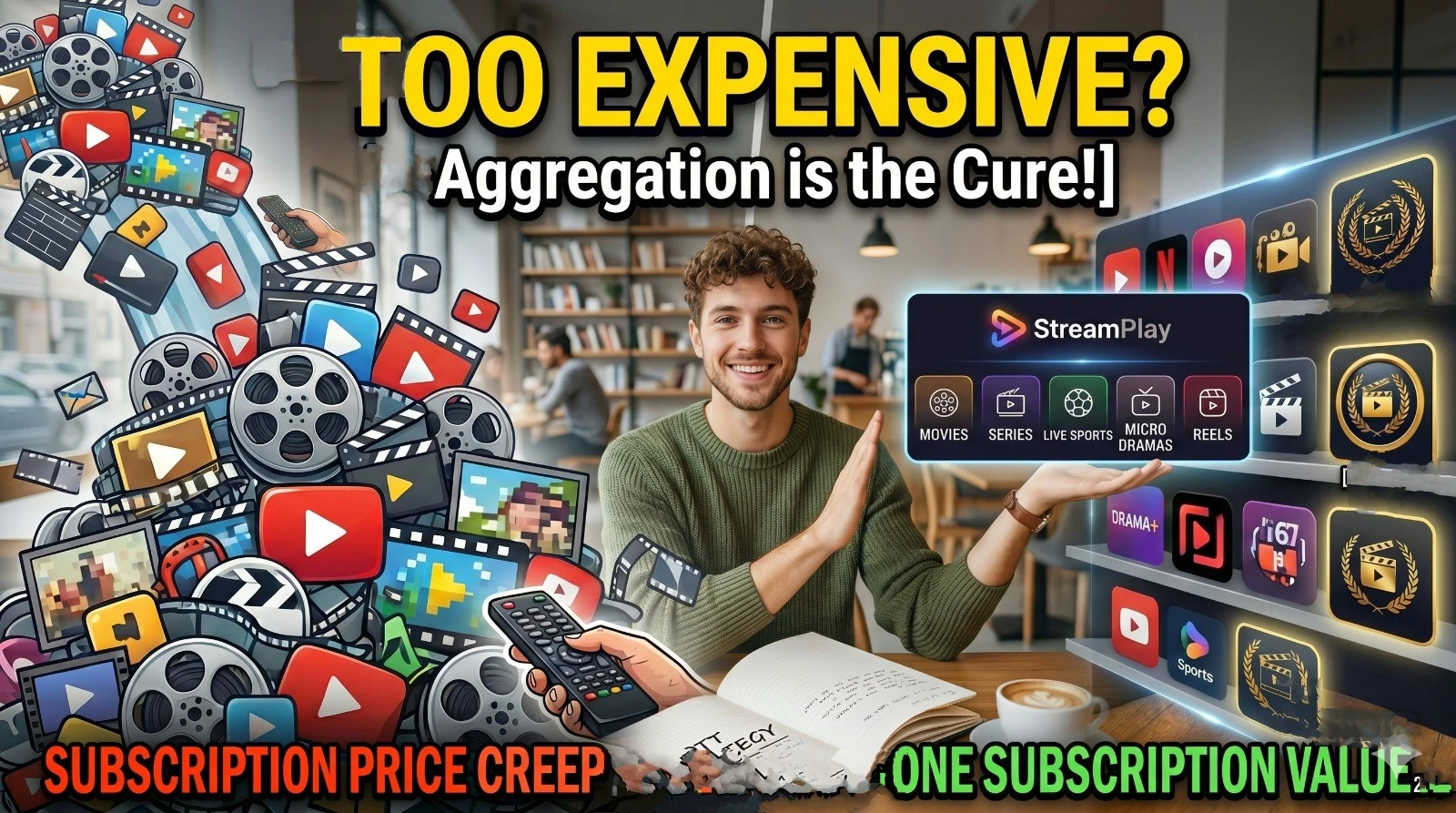
Table of contents
This experience has a name: subscription fatigue. It is the creeping exhaustion arising not from any single platform being bad, but from the accumulated weight of managing too many simultaneously. It has become one of the defining pain points of modern entertainment — a problem the industry created and that viewers are now pushing back against with their wallets and their behaviour.
Why This Matters
Subscription fatigue affects millions of households globally and shapes decisions across the entire entertainment technology ecosystem. Every software development company in the USA building streaming infrastructure, fintech app development services handling billing, and mobile software development companies designing viewing apps feels the downstream effects of viewer exhaustion with fragmented platforms.
Key Forms of Subscription Fatigue:
• Cognitive fatigue from tracking which content lives on which platform simultaneously
• Experiential fatigue when navigating apps depletes energy before viewing even begins
• Management overhead of cancelling, rotating, and re-subscribing across services
• Discovery friction from recommendation engines that only see partial viewing behaviour
Defining Subscription Fatigue
Three Distinct Forms of Exhaustion
Experiential fatigue is perhaps the least discussed but most corrosive form. When accessing entertainment becomes mentally draining, it erodes enjoyment of the entertainment itself. Viewers arriving at their chosen content after navigating multiple platforms are already somewhat depleted before a single frame plays. Custom software development companies in the USA building streaming interfaces are increasingly aware that reducing this friction is a primary design goal.
Key Points:
• Cognitive fatigue adds invisible management overhead to every single viewing session
• Experiential fatigue undermines satisfaction even after content is successfully found
• Web application development companies in USA now measure cognitive load as a core metric
Example / Use Case:
A SaaS development company in the USA building a subscription management tool found users spent an average of eleven minutes per session managing streaming accounts. This management overhead — cancellations, re-subscriptions, password resets — represents pure cognitive cost. Top software development companies in the USA now treat friction reduction as a primary product objective, directly addressing the subscription fatigue problem through better interface and workflow design.
The Numbers Behind the Fatigue
What Research Reveals About Viewer Behaviour
Churn rates tell a complementary story. Platforms with high subscriber acquisition are simultaneously experiencing high churn — viewers signing up for specific series and cancelling within one or two months. This reflects not disloyalty but rational behaviour: viewers optimise spending by rotating through platforms rather than sustaining all indefinitely. Fintech app development services increasingly model this churn rotation as a distinct consumer behaviour pattern.
Key Points:
• High churn rates reflect rational rotation behaviour rather than genuine platform dissatisfaction
• Fintech app development cost modelling now includes streaming rotation as a standard variable
• MVP development company USA teams prototype subscription tracking features for finance apps
Example / Use Case:
An ecommerce app development company building a loyalty platform discovered that streaming subscription rotation mirrored subscription box churn patterns precisely. Applying logistics software development principles — routing viewers to relevant content efficiently — proved equally effective in streaming contexts. Application development companies in the USA are now cross-pollinating these behavioural insights across entertainment and commerce platforms simultaneously.
The Fragmentation Trap
Why Exclusivity Locks Viewers Into Multiple Platforms
The fragmentation trap is self-reinforcing. Platforms invest in exclusive content because it creates subscription reasons that cannot be replicated elsewhere. That investment drives up content costs industry-wide, requiring platforms to raise prices or expand subscriber bases to sustain economics. This mirrors patterns observed by logistics software development companies and shopware development companies managing multi-vendor content supply chains at enterprise scale.
Key Points:
• Rising content costs accelerate price increases that intensify financial fatigue further
• Live sports rights create non-negotiable subscription requirements for dedicated fans
• Software development companies in America build multi-platform aggregation to solve this
How Technology Can Break the Trap
Custom software development services in the USA are tackling fragmentation through aggregation architecture. Magento ecommerce development companies and fintech application development teams apply unified platform principles from commerce — one cart, one checkout, one account — to streaming. AI and automation in marketing enables personalised content discovery across aggregated libraries, breaking the fragmentation trap without requiring viewers to manage multiple platforms manually.
Short-Form Content as a Fatigue Relief Valve
How Format Breadth Reduces Platform Multiplication
Platforms offering compelling micro-dramas and reels alongside long-form libraries serve a much broader range of viewing occasions. A viewer with twenty minutes between commitments finds satisfying entertainment within the same subscription serving their weekend film sessions. Format breadth within a single platform is a direct antidote to the fragmentation that drives subscription fatigue.
Key Points:
• Micro-drama formats serve commute, break, and casual viewing occasions efficiently
• iOS app development company USA teams optimise short-form player performance for mobile
• Android app development USA teams report short-form as fastest-growing content segment
Example / Use Case:
An AI software testing team evaluating streaming platform engagement metrics found that platforms offering both short and long-form content showed forty percent lower subscription cancellation rates. This data reflects a principle that e-commerce software development services have long understood — breadth of offering within a single platform consistently outperforms narrow specialisation for retention and satisfaction.
StreamPlay: Built as the Answer to Subscription Fatigue
One Platform Serving Every Viewing Occasion
The unified recommendation engine is particularly powerful in this context. Because StreamPlay sees viewer engagement across films, sports, and short-form content simultaneously, it builds a holistic preference picture that no single-category platform can match. Better recommendations, faster discovery, and a viewing experience improving over time — the direct opposite of diminishing returns that characterise every additional subscription added to a fragmented portfolio.
Eliminating All Three Forms of Fatigue
StreamPlay addresses financial fatigue through one subscription price replacing multiple. It eliminates cognitive fatigue through one unified interface requiring no management overhead. It resolves experiential fatigue by making discovery genuinely effortless. Explore subscription plans and discover how one straightforward subscription replaces the exhausting complexity of managing multiple streaming platforms simultaneously.
Key Benefits of Choosing a Unified Platform
• One unified interface removes cognitive overhead from managing separate accounts daily
• Effortless discovery resolves experiential fatigue before viewing sessions even begin
• Unified recommendation engine improves personalisation across all content formats
• Short-form and long-form content in one place eliminates platform multiplication need
• AI automation service capabilities continuously improve content matching over time
Common Mistakes Viewers Make with Streaming Subscriptions
• Underestimating cognitive management overhead as a genuine cost of multiple subscriptions
• Overlooking unified aggregator platforms already solving the fragmentation problem
• Treating subscription rotation as a cost-free strategy when management burden is real
• Assuming no single platform can serve diverse content tastes comprehensively
The Future of Streaming and Subscription Models
Artificial intelligence warehouse capabilities combined with AI sales automation and AI email automation will enable aggregator platforms to proactively manage viewer engagement — surfacing relevant content before fatigue sets in rather than after. This forward-looking approach mirrors what the best fintech app development company USA teams are building into subscription management tools for financial services clients today.
Conclusion
The aggregator model is the most coherent and practical response available today. StreamPlay restores the original streaming value proposition — one place, one price, everything you want to watch. In an industry that has drifted far from that ideal, the aggregator is not just a business model. It is the answer viewers have been waiting for.
Planning to launch or modernize an OTT platform?
StreamPlay helps media companies, sports leagues, and broadcasters launch branded OTT aggregator apps with CMS, monetization, discovery, and multi-device support.
Frequently Asked Questions
What exactly is subscription fatigue in streaming?
Subscription fatigue is the combined financial, cognitive, and experiential exhaustion of managing multiple simultaneous streaming subscriptions. It manifests as cost overload, mental overhead from tracking content locations, and reduced enjoyment from navigation friction before viewing even begins.
How many streaming platforms is too many for most viewers?
Research consistently shows that most viewers reach their practical limit between two and four platforms. Beyond that point, the marginal value of each additional subscription declines sharply while management complexity continues growing. Viewers in the three-to-five bracket are almost certainly experiencing active subscription fatigue.
How does short-form content reduce subscription fatigue?
Platforms offering micro-dramas and reels alongside long-form content serve more viewing occasions within a single subscription. This eliminates the need for separate short-form platforms, directly reducing the number of subscriptions required and the associated financial and cognitive management burden.
How does AI help unified platforms serve viewers better?
Marketing automation artificial intelligence and AI and automation in marketing enable unified platforms to build complete viewer preference profiles across all content formats. This produces more accurate recommendations than single-category platforms that only see partial viewing behaviour, improving discovery and long-term viewer satisfaction.
Why is StreamPlay described as the answer to subscription fatigue?
StreamPlay addresses all three forms of subscription fatigue simultaneously. One subscription price resolves financial fatigue. One unified interface eliminates cognitive management overhead. Effortless multi-format discovery removes experiential fatigue entirely, restoring the simplicity that originally made streaming compelling.