
Short-Form vs Long-Form Content: What Modern Viewers Really Prefer
Discover whether modern audiences prefer short-form or long-form content. Explore how reels, micro-dramas, movies, and TV series fit into today's evolving viewing habits.

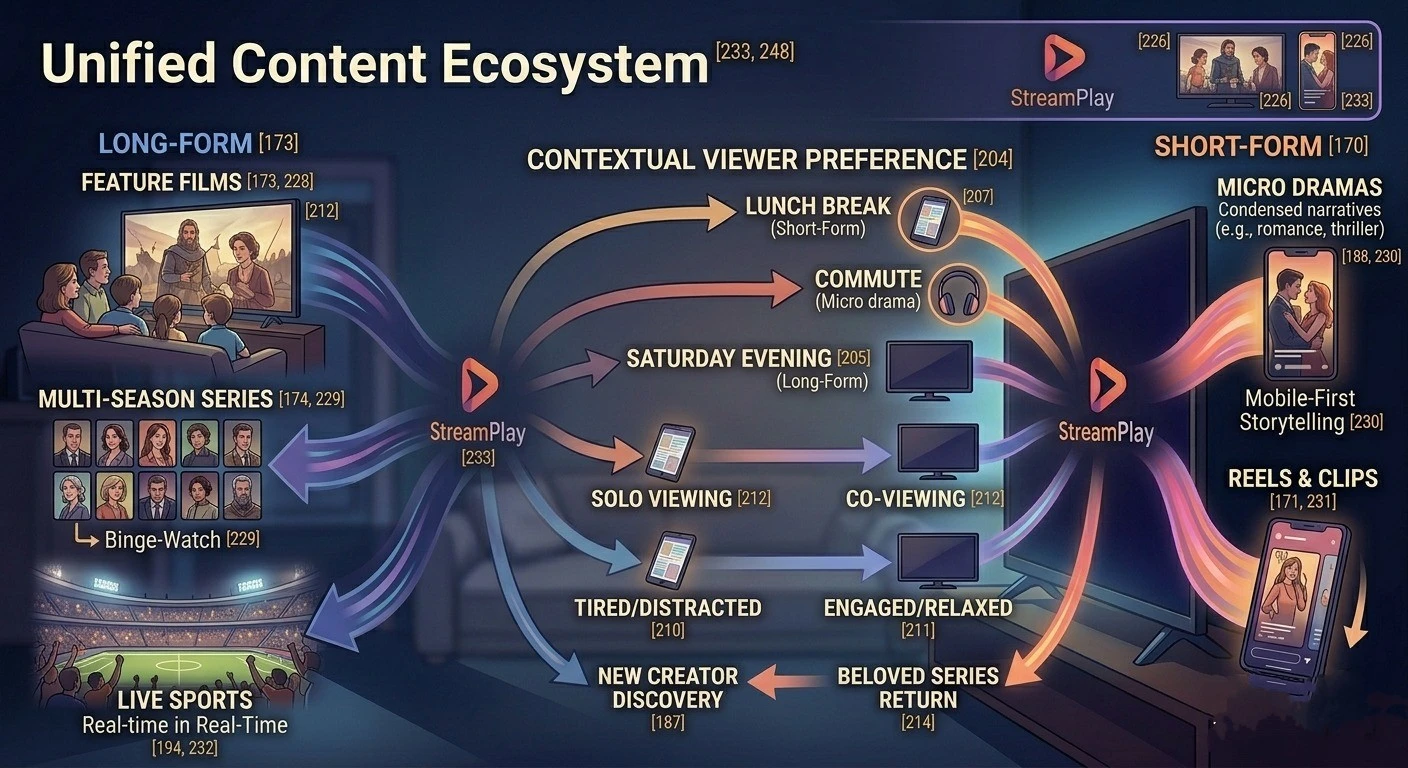
Table of contents
The truth is that modern viewers do not choose between these formats — they move fluidly between them depending on the time available, the device in hand, and the emotional state of the moment. A viewer who spends thirty minutes scrolling reels at lunch will happily commit to a three-hour film on a Saturday evening, and neither habit cancels out the other.
Platforms like StreamPlay have built their content ecosystem around this reality, offering movies, TV series, live sports, micro-dramas, and reels within a single unified experience — because the most honest answer to this debate is that viewers want everything, just at the right moment.
Why This Matters
Why this debate shapes the future of entertainment:
Mobile video consumption has fundamentally changed the time windows available for viewing
Short-form and long-form content serve different psychological needs, not different audiences
Platforms that offer only one format sacrifice the viewer's full daily engagement cycle
Generational viewing habits are more nuanced than the "younger audiences prefer short-form" narrative suggests
The future lies in convergence and flexibility, not competition between formats
Core Concepts: Understanding What Each Format Actually Delivers
The Real Strengths of Short-Form Content
The rise of micro-dramas demonstrates that short-form is not limited to trivial or disposable content. These compact serialised narratives deliver genuine storytelling — romance, thriller, drama — in a radically condensed format that respects the viewer's time without sacrificing emotional engagement.
Key Points
Instant gratification satisfies the brain's reward circuits without requiring extended focus or sustained attention
Mobile-optimised vertical video matches the dominant device through which younger audiences consume all digital media
Discovery is easier in short-form, lowering the barrier between a viewer and content they have never encountered before
Example Use Case
A commuter with ten minutes between stops opens StreamPlay's micro-dramas section and completes a full episode arc within the available window. The narrative is compact but emotionally complete — a genuine storytelling experience that fits the moment precisely rather than demanding more time than the viewer has to give.
The Enduring Power of Long-Form Content
Long-form offers something that short-form is structurally incapable of replicating: the space to develop narrative complexity, build rich fictional worlds, and create the kind of deep emotional investment that generates lasting memories and genuine cultural reference points. The shows and films that command the deepest viewer loyalty are almost exclusively long-form — and that is not a coincidence.
Key Points
World-building requires extended runtime to construct the layered fictional universes that generate the strongest fandoms
Cinematic craft — visual language, performance depth, technical artistry — needs time to develop and pay off
Live sport and event television create simultaneous communal viewing experiences that short-form rarely matches
Example Use Case
A viewer returning home after a long week does not want a two-minute clip — they want to lose themselves in a world. Browsing StreamPlay's series library or movies section for a long evening session satisfies a completely different psychological need than a micro-drama at lunch, and both needs are equally valid parts of the same viewer's weekly entertainment diet.
What Determines Format Preference: Context Over Demographics
The most accurate answer to the short-form versus long-form debate is that viewer preference is overwhelmingly contextual rather than fixed. Research consistently identifies the same factors shaping format choice across all age groups.
The Key Variables That Drive Format Selection
Understanding what drives a viewer toward short or long-form in any given moment is more useful than trying to categorise viewers by demographic. The same person shifts between formats multiple times a day depending on circumstances that have nothing to do with age or identity.
Key Points
Device context shapes the experience — mobile viewing skews toward short-form, television screens pull toward longer immersive content
Emotional state matters — tired or distracted viewers reach for short-form, engaged and relaxed viewers commit to long-form
Social context influences choice — solo viewing trends shorter, co-viewing with a partner or group skews toward films and live events
Example Use Case
A viewer who watches StreamPlay's reels during a lunch break on their phone returns home and opens live sports coverage on a larger screen for the evening. Both sessions represent the same viewer making contextually rational format choices — and a platform that serves both needs retains that viewer across the entire day rather than only part of it.
Key Benefits of Platforms That Serve Both Formats
Viewers engage with the platform across more of their daily viewing windows rather than only during long sessions
Short-form content drives discovery, introducing viewers to creators and genres they later follow in long-form
Long-form content drives loyalty, creating the deep investment that sustains subscriptions over months and years
Live content adds communal viewing moments that neither short nor long-form on-demand content can replicate
A unified platform like StreamPlay — with series, movies, sports, micro-dramas, and reels — removes the friction of switching between platforms for different format needs
Format flexibility keeps viewers engaged regardless of how much time they have available at any given moment
Common Mistakes Viewers and Platforms Make in This Debate
Assuming younger viewers have abandoned long-form, when data consistently shows they consume both heavily
Treating short-form as inherently lower quality or less worthy of serious creative investment
Underestimating how much emotional storytelling micro-dramas can achieve within a compact runtime
Subscribing to platforms that specialise in only one format, leaving other viewing needs unserved
Measuring long-form success by runtime rather than narrative efficiency and pacing quality
Ignoring short-form discovery content, which is often where the most interesting new creators first emerge
Conflating format preference with attention span, when context and circumstance are far more accurate predictors
Future Trends: Convergence Rather Than Competition
Long-form shows are being supplemented by short-form companion content — clips, recaps, and behind-the-scenes reels — that extend engagement beyond the episode itself and reach audiences on platforms where the full series is not available. The viewer of the future will not think in format categories at all. They will simply reach for the content that fits their current moment, trusting their platform to serve the right experience at the right time — whether that is a ninety-second reel, a five-minute micro-drama, or a live sporting final on StreamPlay.
Conclusion
Platforms that build ecosystems broad enough to serve a viewer's full range of moods, schedules, and screens will define the next chapter of entertainment. Explore that full range today at StreamPlay and enjoy the freedom to watch exactly what you want, whenever you want it.
Planning to launch or modernize an OTT platform?
StreamPlay helps media companies, sports leagues, and broadcasters launch branded OTT aggregator apps with CMS, monetization, discovery, and multi-device support.
Frequently Asked Questions
Do modern viewers actually prefer short-form or long-form content?
Research consistently shows that preference is contextual rather than fixed. The same viewer consumes short-form content during commutes and breaks, then commits to long-form series or films during dedicated leisure time. The most accurate answer is that modern viewers prefer flexibility — access to both formats within a platform that serves the right content for each moment.
Are younger audiences really abandoning long-form content for short-form?
No — younger audiences consume both formats heavily, often simultaneously. They are the primary drivers of reels and micro-drama growth, but they also generate enormous viewership for long-form fantasy, thriller, and drama series. What younger viewers demand is quality and narrative efficiency. Tolerance for slow pacing and bloated runtimes is lower, but appetite for strong long-form storytelling remains very high.
What makes micro-dramas different from traditional short-form video?
Micro-dramas are serialised narrative content — typically two to five minutes per episode — that deliver complete story arcs across multiple compact episodes. Unlike general short-form clips or reels, micro-dramas follow structured storytelling conventions including character development, conflict, and resolution, making them a distinct format that bridges short-form accessibility and long-form narrative engagement. Explore StreamPlay's micro-dramas to see the format in practice.
How do platforms decide how much to invest in each content format?
The most successful platforms invest across the full content spectrum rather than choosing one format. Short-form drives discovery and daily engagement across fragmented viewing windows. Long-form drives subscription loyalty and deep emotional investment. Live content creates communal moments. Platforms like StreamPlay that balance all three formats serve more of their viewers' needs across more of the day.