
How Gen Z Is Changing the Way We Consume Content
Discover how Gen Z is reshaping streaming habits through short-form content, personalized discovery, and social viewing experiences.

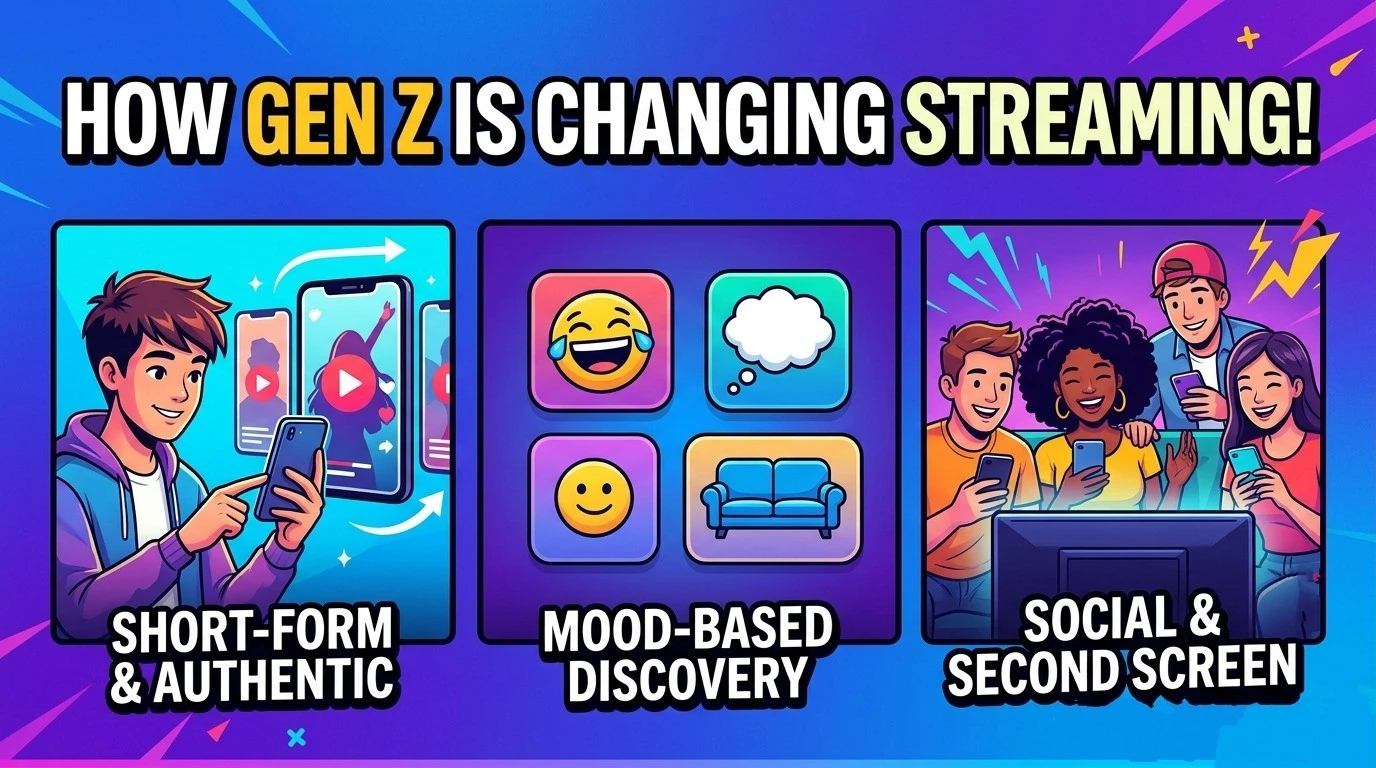
Table of contents
Unlike previous generations, Gen Z grew up with smartphones, social platforms, and instant access to content. Their viewing habits are changing not only what people watch but also how platforms create, organize, and recommend entertainment.
This shift extends far beyond content preferences. It influences platform design, recommendation engines, release strategies, and audience engagement. Understanding these behaviors is essential for streaming services that want to remain relevant in the years ahead.
Why This Matters
Gen Z is becoming one of the most influential audiences in digital entertainment. Their expectations are shaping the future of streaming platforms worldwide.
Key Reasons
Personalized recommendations are becoming a standard expectation.
Social engagement increasingly influences viewing decisions.
Platform loyalty depends heavily on discovery experiences.
Future streaming trends are largely driven by Gen Z behavior.
The Rise of Short-Form Content
Attention Is Earned Faster Than Ever
This preference does not indicate a lack of attention. Instead, it reflects higher expectations for immediate value and stronger competition for viewer attention.
Key Points
Viewers expect immediate engagement.
Short-form content supports flexible viewing habits.
Discovery often happens through quick content snippets.
Example: The Commute Viewer
A viewer traveling to work may spend fifteen minutes watching several micro dramas rather than starting a full-length series. Platforms that support both experiences remain more relevant throughout the day.
Mood-Based Viewing Is Replacing Fixed Schedules
Content Must Adapt to the Viewer
The same viewer may choose live sports during the weekend, short videos during lunch breaks, and a movie at night. Platforms must recognize these changing preferences instantly.
Key Points
Personalization improves content relevance.
Flexible consumption increases engagement.
Discovery speed impacts user satisfaction.
Example: Multiple Viewing Modes
A user opening a streaming platform during a ten-minute break expects different recommendations than someone browsing on a relaxed weekend evening.
Authenticity Is More Valuable Than Production Scale
Planning to launch or modernize an OTT platform?
StreamPlay helps media companies, sports leagues, and broadcasters launch branded OTT aggregator apps with CMS, monetization, discovery, and multi-device support.