
Short-Form vs Long-Form Content: What Modern Viewers Really Prefer
The debate has never been louder. On one side, the unstoppable rise of vertical videos, reels, and micro-dramas — content engineered for the scrolling thumb.

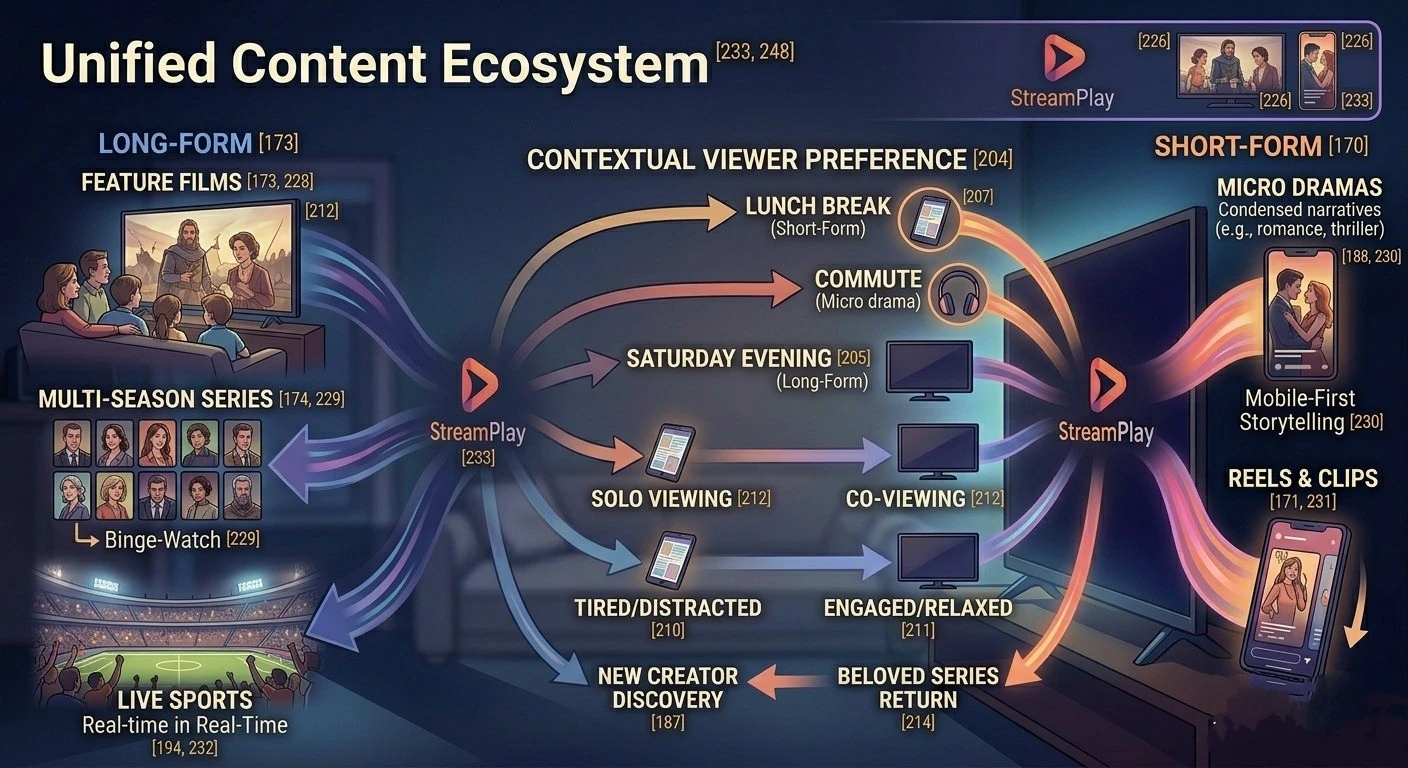
Table of contents
The debate has never been louder. On one side, the unstoppable rise of vertical videos, reels, and micro-dramas — content engineered for the scrolling thumb. On the other, prestige long-form series and epic films continue to command deep emotional investment and cultural conversation. So which format do modern viewers actually prefer — and does the question even have a single answer?
Defining the Formats
Long-form sits at the other end. Feature films run ninety minutes to three hours. Episodic series deliver forty-five to sixty minutes per episode across multiple seasons. Live sports broadcasts can run two to four hours for a single match. Long-form demands sustained attention but rewards viewers with depth, complexity, and emotional investment that shorter formats rarely achieve.
Between these poles sits a growing middle ground — limited series, documentary features, and extended micro-drama arcs that borrow characteristics from both ends.
The Case for Short-Form: Speed and Accessibility
Short-form offers several powerful advantages:
Low commitment: A two-minute reel requires almost no decision cost. Viewers can dip in and out without feeling obligated to finish or recall complex context.
Instant gratification: Short-form delivers emotional payoff quickly — a laugh, a gasp, a revelation — satisfying the brain's reward circuits without extended engagement.
Discovery-friendly: The low barrier to entry means viewers will try unfamiliar creators and genres in ways they wouldn't risk with a two-hour film.
Mobile-optimised: Vertical video matches the dominant device through which younger audiences consume all digital media.
The rise of micro-dramas demonstrates that short-form isn't just for trivial content. These compact narratives deliver genuine storytelling — romance, thriller, drama — in a radically condensed format that respects the viewer's time without sacrificing emotional engagement.
The Case for Long-Form: Depth and Emotional Resonance
Long-form offers things short-form structurally cannot:
Narrative complexity: Multi-season series develop characters across years, build intricate plotlines, and create the kind of deep investment that generates lasting emotional memories.
World-building: Extended runtimes allow creators to construct rich fictional universes — an experience impossible to achieve in five minutes.
Cinematic craft: The visual language, performance, and technical artistry of a great film requires time to develop and reward.
Communal viewing: Long-form content — particularly live sport and event television — creates shared experiences that become cultural reference points in ways short-form rarely achieves.
The shows and films that generate the deepest viewer loyalty are almost exclusively long-form. Great storytelling requires space to develop, breathe, and pay off. Browse StreamPlay's full movies and series library to find your next long-form obsession.
What the Data Shows: Context Is Everything
Research consistently identifies key factors that determine format preference:
Available time: Short sessions favour short-form; dedicated leisure time favours long-form.
Device: Mobile viewing skews toward short-form. Television screens pull viewers toward longer, more immersive content.
Emotional state: Tired or distracted viewers reach for short-form; engaged and relaxed viewers commit to long-form narratives.
Social context: Solo viewing often trends shorter; co-viewing with a partner or group skews longer, particularly toward films and sports.
Discovery vs. loyalty: Viewers exploring new content favour short-form's low commitment; viewers returning to beloved series willingly invest long sessions.
Generational Differences: Are Younger Viewers Abandoning Long-Form?
Younger audiences do consume more short-form content and are the primary drivers of reels and micro-drama growth. But the same demographic generates enormous viewership for long-form series, particularly fantasy, sci-fi, and thriller. They are not abandoning long-form — they are consuming both, often simultaneously.
What younger viewers demand, however, is quality and respect for their time. A long-form show must justify its runtime. Pacing, narrative efficiency, and production quality are scrutinised more harshly by an audience raised on the instant gratification of short-form. Tolerance for filler, slow burns, and bloated runtimes is lower than ever.
The Platform Response: Serving Both Formats
Feature films and blockbusters for dedicated viewing sessions
Multi-season series for deep narrative investment and binge-watching
Micro-dramas for mobile-first, time-efficient storytelling
Reels and short-form clips for discovery and filling fragmented time
Live sports for real-time communal viewing
The goal is not to force a choice between formats but to remove the friction between them — so a viewer can switch from a micro-drama on their commute to a film at home in the evening without leaving the platform.
The Future: Convergence, Not Competition
The viewer of the future won't think in format categories at all. They will simply reach for the content that fits their current moment, trusting their platform to serve the right experience at the right time — whether that's a ninety-second reel, a micro-drama arc, or a live sports final.
Conclusion
Platforms that build ecosystems broad enough to serve a viewer's full range of moods, schedules, and screens will define the next chapter of entertainment. Start exploring StreamPlay today — and enjoy the freedom to watch exactly what you want, whenever you want it.
Planning to launch or modernize an OTT platform?
StreamPlay helps media companies, sports leagues, and broadcasters launch branded OTT aggregator apps with CMS, monetization, discovery, and multi-device support.